
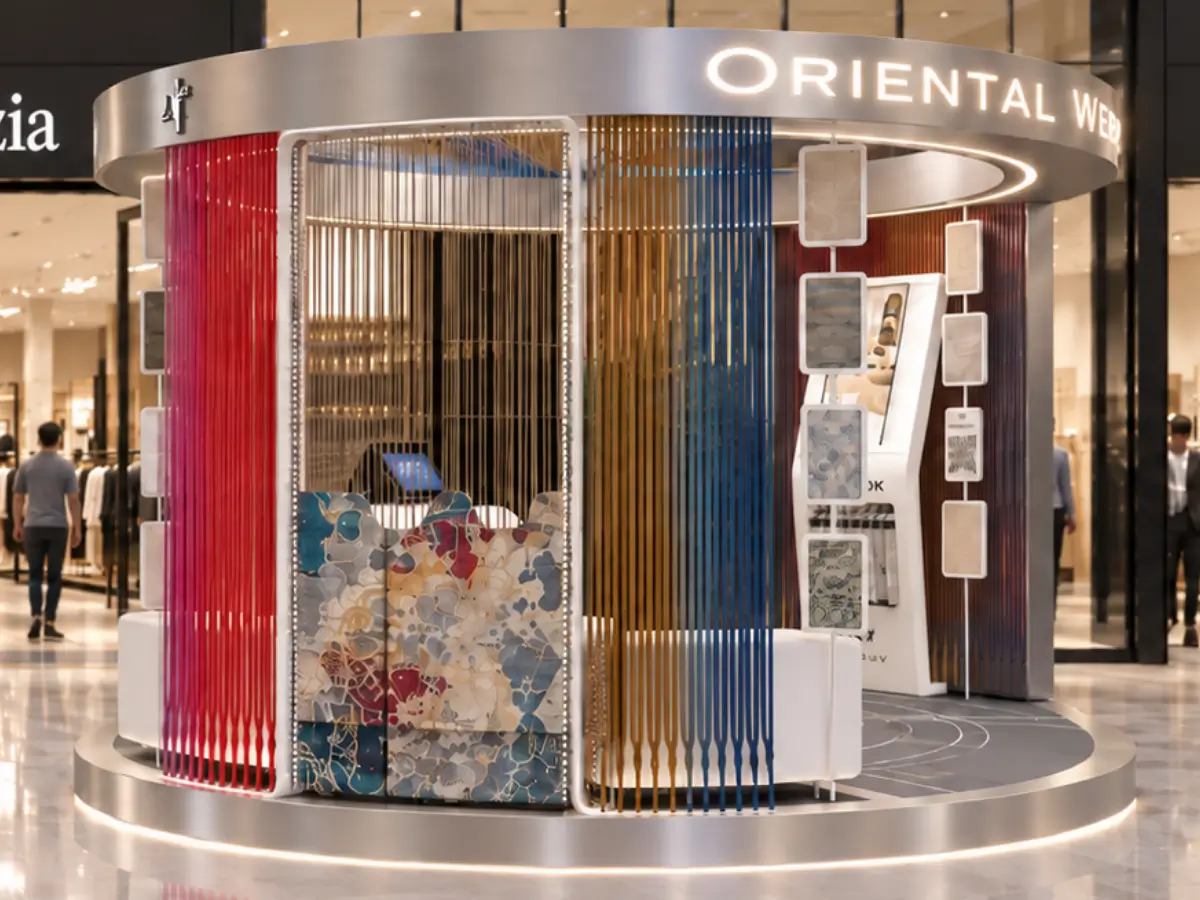
Traditionally, buying a carpet is a physical and sensory experience. Customers visit carpets’ showrooms, browse displayed collections, compare patterns and colors, and touch materials to understand their texture and quality. The process often involves exploring extensive product selections within a physical space, with the showroom serving as the primary destination for product discovery and decision-making.
While this traditional approach allows customers to experience the product firsthand, it also presents an opportunity to rethink how carpet collections are explored, especially as digital technologies reshape customer expectations. How can customers access a wider range of products without depending entirely on physical displays? How can technology simplify product discovery while preserving the tactile experience that makes carpet shopping unique?
For Oriental Weavers, these questions opened the door to a new retail possibility: bringing the convenience of digital shopping into a physical environment without losing the connection between customers and the product. Explore the OW DropBuy retail project to see how this concept translates into a physical retail environment.
Understanding the Brief | Defining the Opportunity
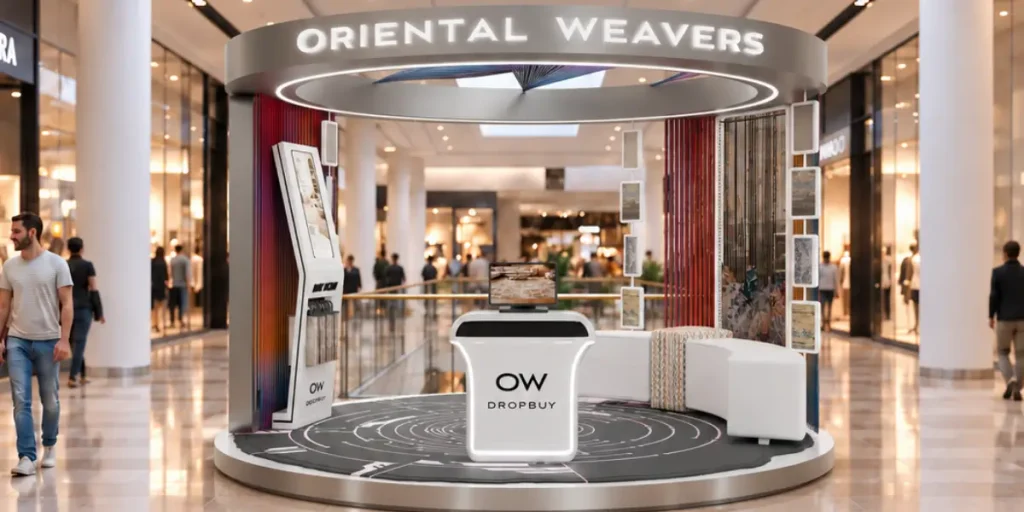
The first step was to understand the purpose of OW DropBuy project and the requirements of its new retail format. The concept needed to make a broad carpet collection accessible within a limited footprint while maintaining meaningful product interaction. Customers needed to browse digitally, examine physical samples, access product information, and navigate their shopping journey intuitively.
The challenge was to balance several requirements: compactness, functionality, accessibility, brand identity, and technological integration.
Rather than simply reducing the scale of a traditional showroom, the project called for a different way of organizing the retail experience, one in which digital tools expanded product discovery and physical elements preserved the sensory connection to the product.
This approach reflects the role of kiosk design services in creating compact, functional retail environments that combine brand identity, product presentation, and customer interaction.
Research Beyond the Concept | Understanding Oriental Weavers
Before developing the design direction, SKETCHURE explored the brand, its products, and its existing retail environment. The research extended beyond visual references to gain a deeper understanding of the relationship between carpet craftsmanship, product presentation, and customer interaction.
Factory Visits | Understanding the Product
The factory visit offered an opportunity to explore the manufacturing context behind Oriental Weavers’ products. Understanding the production environment helped connect the retail concept with the materials, processes, and expertise associated with carpet-making.
This perspective informed the project’s broader design narrative: presenting a product with a strong physical and material identity through a contemporary, technology-enabled experience.
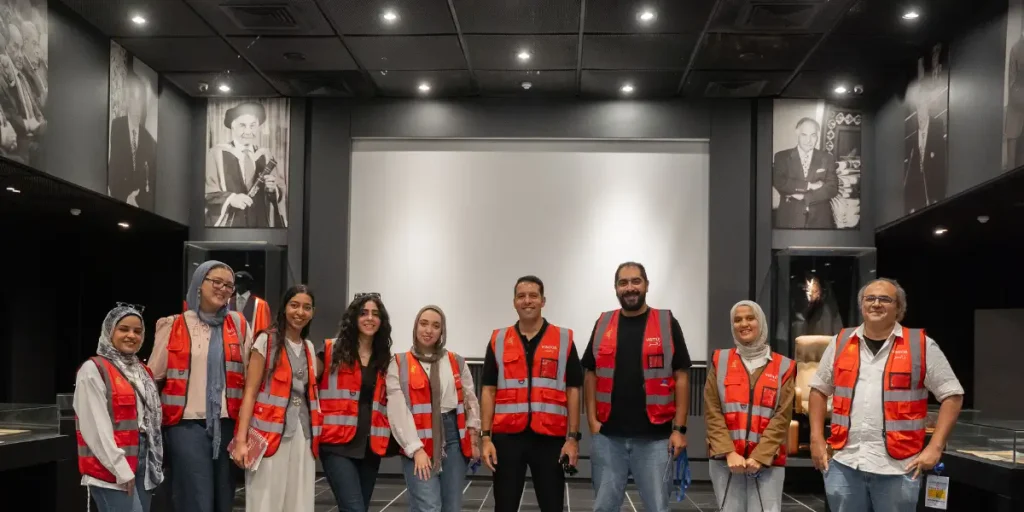
Existing Store Visits | Studying Traditional Retail
Visits to existing Oriental Weavers stores provided a practical reference for understanding the traditional carpet-shopping journey.
The team explored how collections were presented, how customers could interact with products, and how the physical environment supported product discovery and selection.
These observations helped frame the opportunity for a more compact retail format—one that could retain the essential qualities of physical shopping while introducing new ways to access and explore the collection.
Brand and Customer Research | Connecting Physical and Digital
The research also considered how the brand’s product offering could be supported by digital interactions.
Carpet shopping involves more than selecting an image on a screen. Color, texture, pattern, and the relationship between a carpet and its intended interior all influence the decision-making process.
This made the integration of physical samples and digital tools particularly important. The opportunity was to use technology to support product discovery, not to replace the tangible experience of evaluating a carpet.
Concept Development | The Circle as a Connected Journey
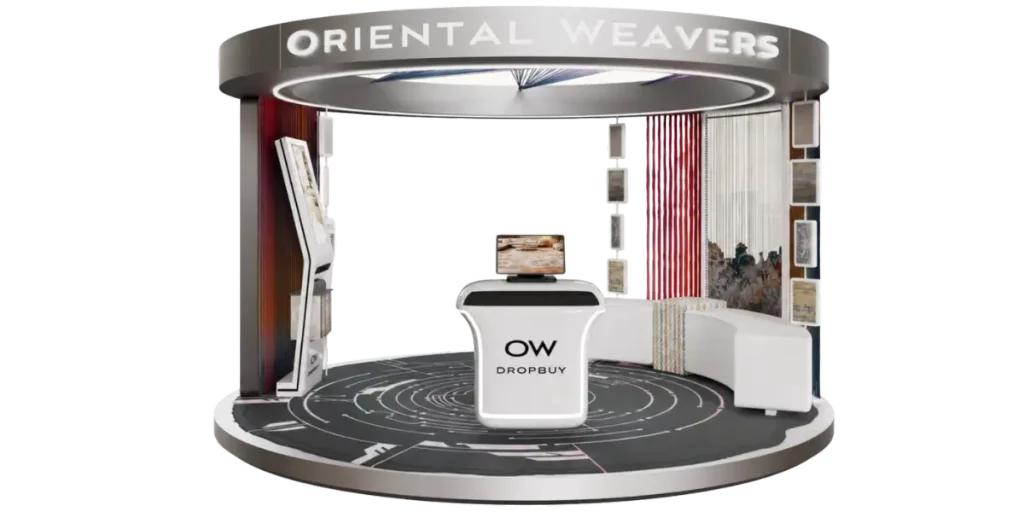
The design concept explored the circle as a central architectural and experiential element.
Research into circular forms and historical architectural spaces helped inform the exploration of continuity, movement, and a connected spatial experience.
The circle offered a way to think beyond isolated display units and toward a more unified environment. It also supported the idea of a 360-degree customer journey, connecting different interactions within one coherent retail concept.
The intention was to create a recognizable physical identity while ensuring that the form remained functional within the available mall footprint.
Site Analysis and Zoning | Making Every Element Count
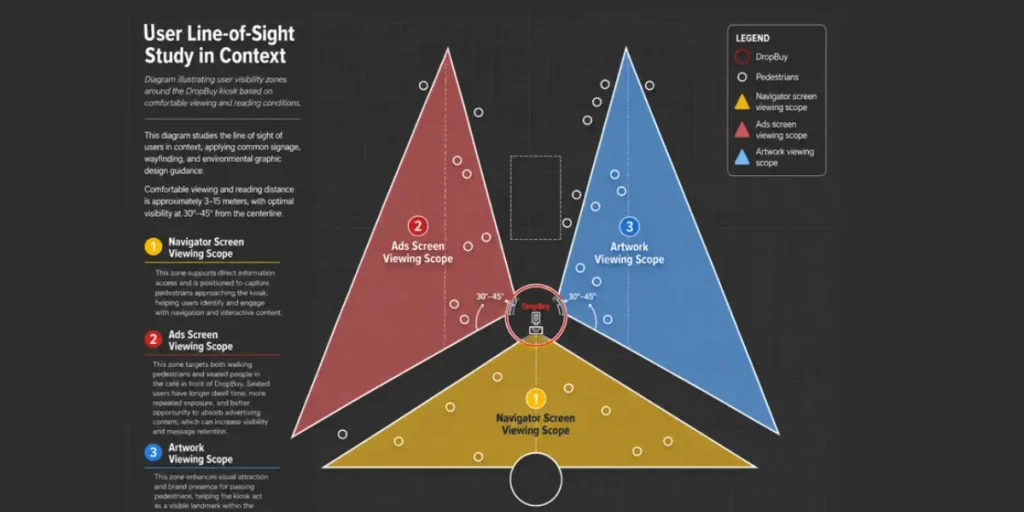
Working within a compact retail space required careful consideration of the relationship between movement, visibility, accessibility, and functionality.
The zoning process focused on integrating digital browsing stations, physical sample storage, navigation interfaces, and display elements into a cohesive environment.
Each component needed to contribute to the overall experience without creating unnecessary complexity. The arrangement had to support intuitive exploration while allowing customers to move naturally between digital information and physical product interaction.
The space was therefore approached as a connected system rather than a collection of independent fixtures.
The Customer Journey | Explore, Choose, Buy
OW DropBuy is built around three stages that connect product discovery with purchasing convenience.
Explore: Customers browse Oriental Weavers’ digital catalog and discover products beyond what could be displayed physically within the compact space.
Choose: Digital product information and physical samples support the evaluation process. Features such as AR room visualization can help customers imagine how a carpet might look within their own interiors.
Buy: The Browse & Buy experience connects product selection with purchasing and delivery, simplifying the transition from discovery to transaction.
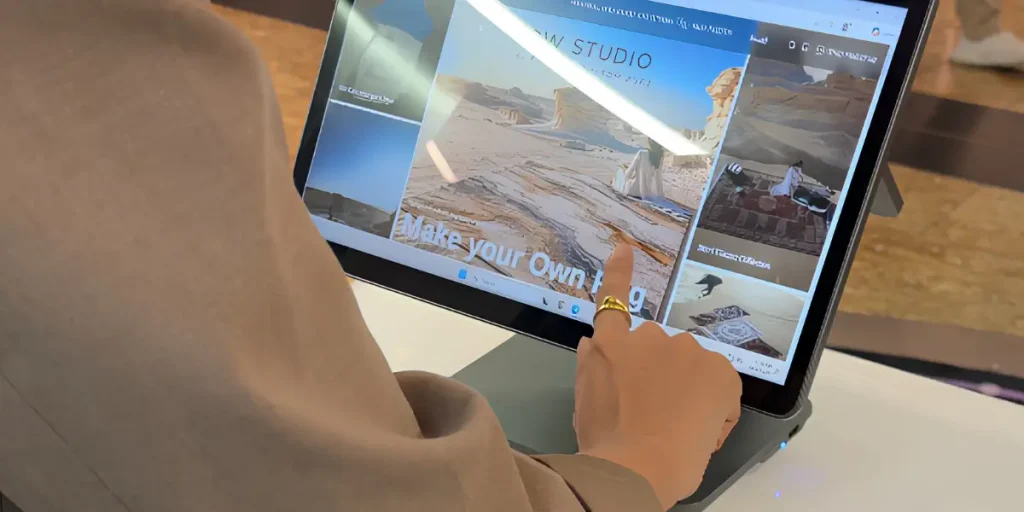
The broader concept also incorporates OW Studio for personalized design exploration and the Try@Home experience, extending the possibilities of digital retail beyond the initial interaction.
Together, these touchpoints demonstrate how technology can support a more flexible shopping experience while preserving the importance of physical product engagement.
Design Development | Translating the Concept into Components
The design translated the project’s functional and experiential requirements into a series of integrated elements.
01. Browsing Unit
A steel structure integrating a digital touchscreen, physical sample library, and QR access. The unit brings digital catalog exploration and tangible product interaction together in one compact station.
02. Storage Unit
A sample-storage solution featuring transparent acrylic drawers organized by color, pull-out samples, and an integrated seating option. The design prioritizes accessibility and organization while making physical product exploration part of the retail experience.
03. Carpet Artpiece
A steel structure incorporating colored ropes and metallic-thread detailing. The installation explores the relationship between carpet heritage and contemporary design, adding an expressive textile-inspired element to the overall composition.
04. Navigator
A steel structure with an acrylic finish, integrating a digital touchscreen for catalog browsing and a QR panel for product information and assistance. It supports navigation and connects the physical environment with digital resources.
05. Display Screen
A large-format digital display integrated into the spatial composition, providing a surface for visual communication and reinforcing the technological character of the concept.
Materiality | Balancing Craftsmanship and Technology
The material palette supports the relationship between physical product heritage and digital innovation.
Steel provides structural definition, while acrylic introduces transparency and a contemporary finish. Digital screens establish the technological dimension, and physical carpet samples preserve the tactile quality at the center of the shopping experience.
The carpet artpiece introduces colored ropes and metallic threads, bringing textile-inspired expression into the architectural composition.
Together, these materials help establish a coherent design language in which functionality, technology, and visual identity work together.
The Outcome | A New Perspective on Carpet Retail
OW DropBuy explores how a traditional product category can be presented through a more compact, interactive, and digitally connected format.
For Oriental Weavers, the concept creates a physical touchpoint for digital retail, connecting product discovery, material exploration, and purchasing convenience. For SKETCHURE interior design firm, the project reflects a research-led approach to retail interior design, beginning with an understanding of the brand and its customers before translating those insights into functional, engaging retail environments.
The project is guided by three principles:
COMPACT. PHYGITAL. SCALABLE.
Together, these principles define a retail experience where physical craftsmanship and digital convenience work alongside one another.
Inspired by OW DropBuy? Let’s Talk.
Looking to create an innovative retail experience for your brand? Talk to SKETCHURE about your next retail interior design project.
Get a Consultation