

Artificial intelligence is rapidly changing the way interior designers develop, visualize, and communicate their ideas. From generating fully rendered images from a simple sketch or mood board to transforming static renders into immersive videos, AI is making it possible to explore and communicate design concepts faster than ever before.
But the future of interior design is not about AI replacing designers. It is about understanding how technology can support creativity while allowing designers to spend more time on imagination, problem-solving, and developing meaningful spaces.
For Me, an interior designer at SKETCHURE, AI represents a powerful tool within the design process, one that can make workflows more efficient, expand creative possibilities, and help designers communicate the intended experience of a space more effectively.
From Ideas to Fully Rendered Spaces
One of the most significant ways AI is transforming interior design is through visualization.
A designer may begin with a 3D model, a sketch, or even just a mood board. With AI, they can quickly prompt the elements they want to introduce and see them appear as a fully rendered image. AI can also manipulate and modify existing images, allowing both the designer and the client to develop a clearer understanding of what the final design could look like. This creates a faster connection between an initial idea and its visual representation.
Instead of spending excessive amounts of time modeling every possibility before being able to evaluate it, designers can use AI to explore different directions and understand how the various elements within a scene work and harmonize together.
However, speed does not automatically mean better design. Relying entirely on AI can result in similar or repetitive outcomes for different clients. This is why the designer’s creativity, knowledge, and critical thinking remain essential to developing designs that are unique and meaningful.
Technology Has Already Changed How Designers Work
AI is part of a much larger technological evolution within interior design.
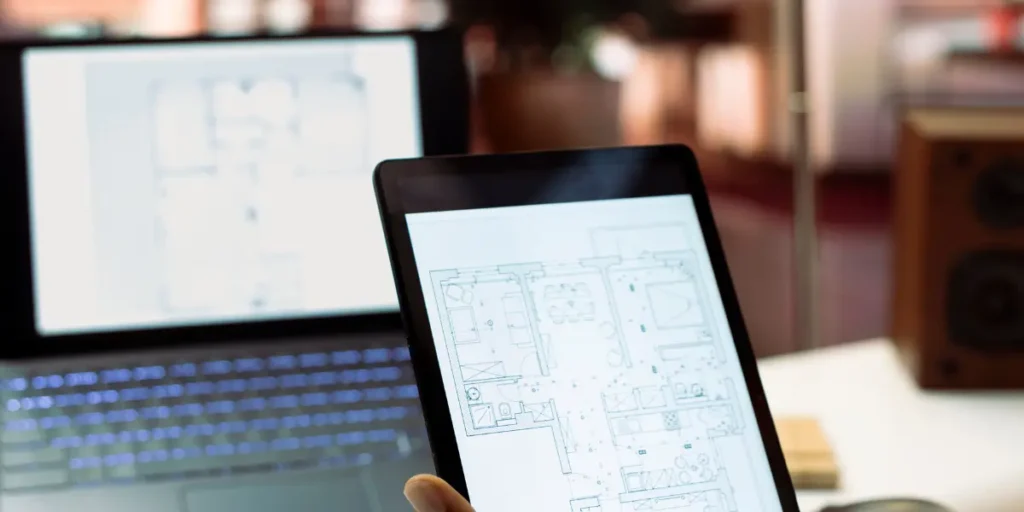
The introduction of 3D modeling programs has already transformed the profession by making it possible to create increasingly complex forms and models, including parametric designs. These technologies have expanded the possibilities for creativity and imagination and allowed designers to explore forms that would have been more difficult to develop previously.
Technology has also changed the way designers think about furniture.
With advanced mechanisms and smart systems being introduced into furniture, furniture can now be considered a dynamic element rather than simply a static object within a space. This opens new possibilities for creating interiors that are more interactive, flexible, and innovative.
AI is continuing this evolution by giving designers additional tools to explore, visualize, and develop these ideas.
From Static Renders to Experiencing the Space
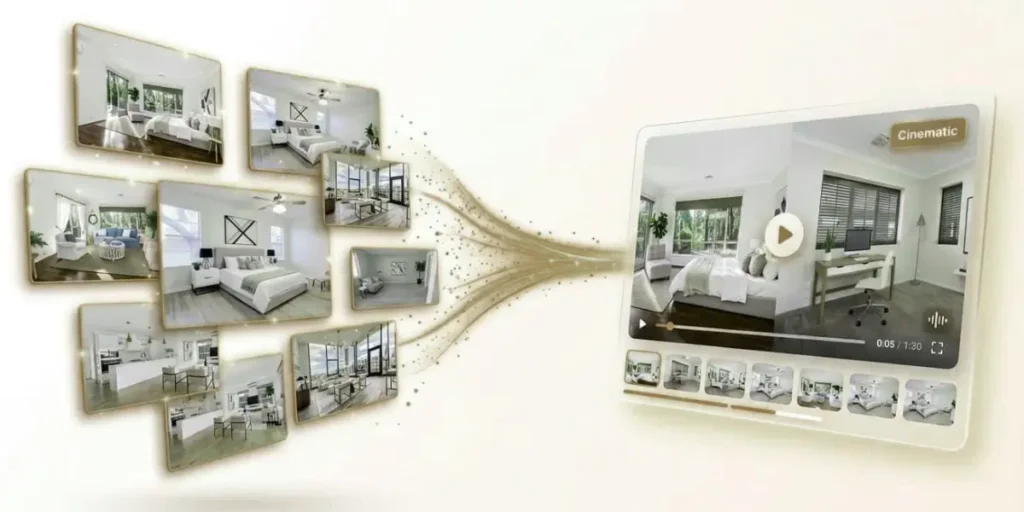
Among the many AI tools available today, one of the biggest impacts on interior design has been the development of fast video generation from a single image.
For Me, this is particularly important because it gives clients something more valuable than a static render: a sense of feeling and experience. Ultimately, interior design is not only about how a space looks. It is about the experience that the space creates.
A static render can communicate materials, furniture, lighting, proportions, and other visual details. An AI-generated video can go further by allowing the client to experience the atmosphere, movement, and emotions that the space is intended to create. Instead of concentrating only on individual details within a rendered image, clients can gain a stronger understanding of how the entire space feels.
This makes AI-generated videos a powerful communication tool. They can help designers present their ideas more effectively and make it easier for clients to understand and ultimately connect with the proposed design.
AI Is Making Design Workflows More Efficient
Interior design involves many time-consuming processes, and AI can support designers at different stages of their daily workflow.
AI can assist with brainstorming and image generation, and it can even support modeling through Python scripts. By reducing the amount of time spent on repetitive or technically demanding tasks, designers can focus more of their energy on imagination and creativity.
This is especially valuable when working with complex forms or designs where the modeling process can become time-consuming and stressful. Rather than spending excessive amounts of time simply modeling an idea before being able to explore it, designers can use AI to support the process and unlock more time for creative thinking.
The result is not simply a faster workflow. It can also give designers more freedom to explore ideas that they may otherwise have abandoned because of the time required to develop them.
AI and the Evolution of 3D Visualization
AI is also changing the way designers approach 3D visualization and rendering, although its benefits can differ depending on the designer’s level of experience.
- For Beginners
For beginners, AI-generated images can provide a useful visual reference for understanding what makes a render look realistic and convincing.
Image-generation models, such as Nano Banana, have been trained on vast amounts of visual data. As a result, they can generate details such as ambient lighting, realistic shadows, textures, and natural imperfections. Although these generations still have flaws and limitations, they can help beginners develop a stronger visual understanding of realistic rendering.
AI can therefore become a learning tool, allowing designers to observe how different visual elements contribute to the overall quality of an image.
- For Advanced Visualizers
For advanced users, AI can significantly accelerate the visualization process. Designers can use AI to upscale and enhance professional renders, potentially reducing work that might normally take several days to something that can be completed within hours.
AI can also be used to train personal libraries or LoRAs using previous work. This allows designers to generate images that are closer to their own personal style and design language.
This is particularly valuable because the goal is not simply to generate more images. AI can help designers generate ideas that remain aligned with their established visual identity.
It can also become useful during creative blocks, providing new ideas and directions without forcing the designer to abandon their own design language.
Can AI Replace Interior Designers?
The question of whether AI can replace interior designers is becoming increasingly common. However, AI still has important limitations.
Interior design requires creativity, original thinking, and sometimes completely new approaches or elements. AI primarily generates results based on existing visual references and patterns. In many cases, its output can be understood as a remix or variation of designs that already exist rather than the development of a truly original concept.
There is another important limitation: AI does not fully understand the practical and functional requirements of a real space.
The Difference Between Generating an Image and Designing a Space
A visually impressive AI-generated image does not necessarily represent a successful interior design.
Design is not only about producing an attractive visual. It involves understanding the requirements of a real space and making decisions based on functionality, ergonomics, construction, safety, materials, sustainability, and the needs of the client.
AI can generate possibilities, but the designer must determine which possibilities are appropriate.
This distinction becomes increasingly important as AI-generated images become more realistic. A design may look convincing on screen while containing details that cannot actually be constructed or used effectively in a real environment.
The designer’s expertise is therefore what transforms an image into a considered space.
AI-generated designs can contain flaws, unrealistic details, or potential safety hazards. Some elements may look visually impressive but may not be functional, safe, or constructible.
This is why AI-generated output still needs to be carefully evaluated and corrected by a professional.
For now, the designer remains essential. AI should be viewed as a powerful tool that supports the designer’s creativity and workflow rather than replacing the designer’s role.

What Skills Will Designers Need in the AI Era?
As AI becomes increasingly integrated into interior design, designers will need to combine traditional design skills with new technological skills. Creativity, critical thinking, and problem-solving will remain essential.
Designers also need to know how to communicate effectively with AI through prompting and, just as importantly, how to evaluate and improve AI-generated results rather than simply accepting them.
Technical knowledge will become increasingly valuable as well. Skills in 3D modeling, rendering, digital fabrication, and AI-assisted workflows can help designers make better use of emerging technologies. At the same time, designers need a strong understanding of materials, construction, ergonomics, sustainability, and safety. These are areas where human judgment remains particularly important.
The most successful designers in the AI era will therefore not necessarily be those who use the most AI tools. They will be the designers who can combine technology with creativity and design knowledge, using AI to work faster and explore more ideas without losing their own design identity.
Opportunities and Challenges of AI in Interior Design
AI creates significant opportunities for interior designers. It can provide faster visualization, easier brainstorming, improved rendering, and more efficient workflows. Designers can quickly generate different concepts, experiment with materials and styles, and communicate ideas through realistic images and videos.
This allows them to explore more possibilities in less time and can make the design process more interactive for both designers and clients. However, these opportunities also come with challenges.
One major challenge is the way AI can raise client expectations. Clients can now generate highly realistic and impressive images themselves. If a designer has weak visualization skills, limited creativity, or struggles to develop strong ideas, the client may perceive the designer as less capable—particularly when they can produce attractive concepts using AI.
This means designers need to become stronger creatively and visually rather than relying on AI to generate everything for them.
There is also the challenge of accuracy.AI-generated images can contain unrealistic details, functional problems, or elements that cannot actually be constructed. Designers therefore still need technical knowledge and critical thinking to evaluate and correct AI-generated designs.
Ultimately, AI creates an opportunity for designers to work faster and explore more ideas, but it also increases the need for designers to distinguish themselves through creativity, expertise, and a strong personal design identity.
The Future of Interior Design Is Human + AI
The future of interior design will not simply be about replacing traditional design processes with artificial intelligence. It will be about combining the capabilities of AI with the qualities that make human-led design valuable. AI can generate possibilities, accelerate visualization, support workflows, enhance renders, create videos, assist with modeling, and help designers overcome creative blocks.
But creativity, original thinking, critical thinking, technical knowledge, and human judgment remain essential.
A successful interior designer in the AI era will need to understand both sides: how to use technology effectively and how to know when technology should not make the final decision. The real opportunity is therefore not AI versus the interior designer, but AI supporting the interior designer.
When used thoughtfully, AI can give designers more time to imagine, explore, and develop meaningful spaces while their expertise remains responsible for turning those possibilities into functional, safe, buildable, and distinctive interiors.
For SKETCHURE, this represents an important direction for the future of design: embracing new technology while maintaining the creativity, expertise, and individual design identity that make every space unique.
Mahmoud’s Design Philosophy
Every designer develops a philosophy that shapes the way they think, create, and solve problems. For Me, technology is a powerful part of the design process, but human creativity, critical thinking, and understanding of how people experience a space remain at the heart of every project.
“AI can assist the design process, but the designer remains responsible for the final design decisions.”
Mahmoud Mostafa
Jr. Architect
