
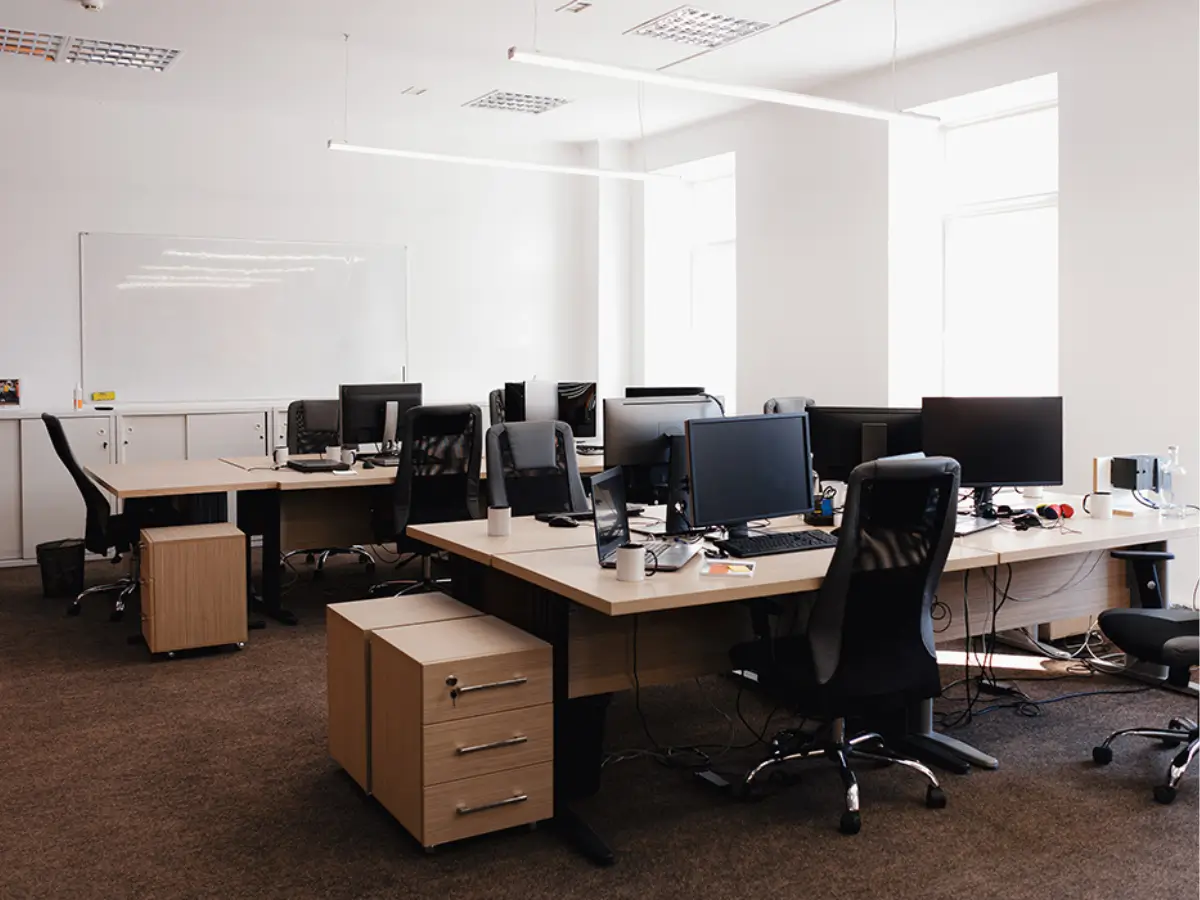
Office designs are a physical expression of a company’s values! Choosing the right design for your company influences how employees create, collaborate, and perform. In this piece, we’re exploring some of the most recognizable office styles and how each one reflects a different kind of work culture.
1. Industrial Style: Warehouse Walls and Office Halls: Industrial
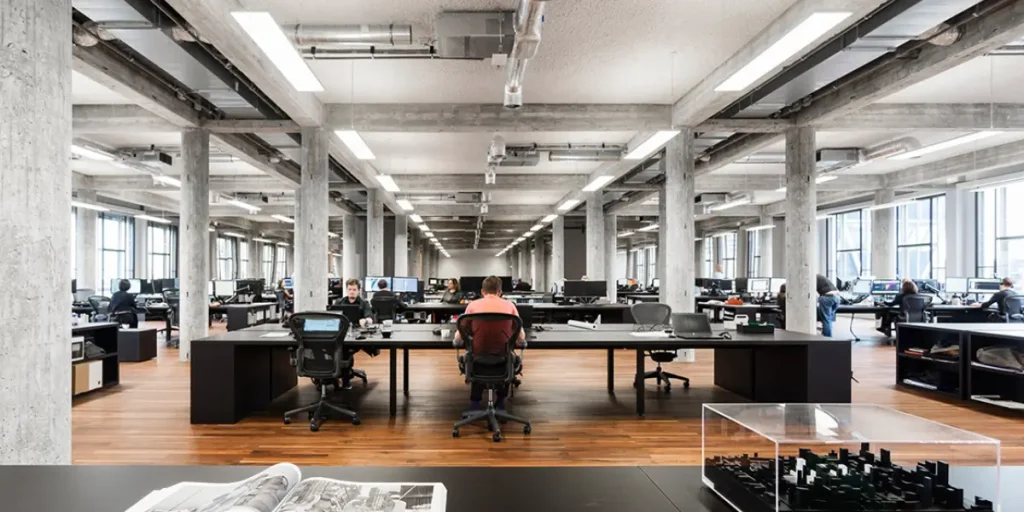
Old factories and warehouses: an inspiration to architects in the 19th century.
Here are the key features of industrial office designs:
- Exposed concrete walls and beams
- Metal and steel columns
- Industrial-grade metal elements like ‘piping’
- Lighting features:
- exposed Lights
- Raw lighting fixtures
- Pendant Lights to add warmth and style
- Bare-faced light bulbs for a minimalist, industrial feel
- Daylighting:
- Expansive windows
- Overhead skylights
- Color Palette:
- Warm Earth Tones
- Browns, greys, and tans that bring warmth to the space
- Indoor Greenery and area rugs
- Plants and textiles
2. Minimalistic Style: Less is More
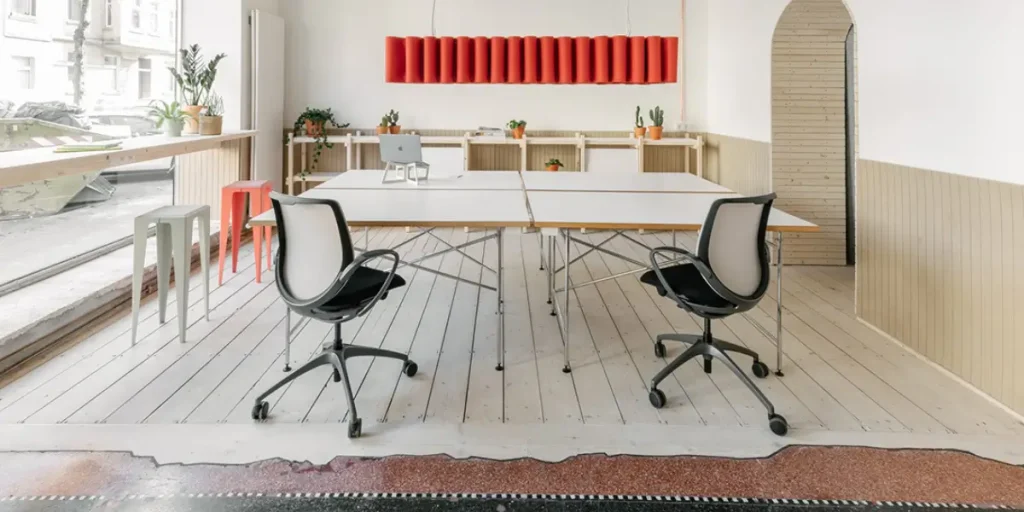
Minimalistic design strips your workspace down to the essentials, creating a calm, peaceful environment that boosts focus and collaboration.
Here are the key features of minimalistic office designs:
- Layout
- Open‑plan areas that enhance communication
- Flexible zones that create a sense of community and adapt to changing needs
- Lighting
- Daylight as the primary source (large windows)
- Simple, subtle fixtures that blend seamlessly
- Furniture
- Limited pieces chosen for both form and function
- High‑quality, multi‑purpose items that reduce clutter
- Color Scheme
- Monochromatic palettes to open up the space
- Natural‑wood accents for warmth and subtle contrast
3. Corporate Style: Beyond the Cubicle
In contrast to the standard neutral palettes and subtle branding, today’s corporate offices feature open spaces and ergonomic furniture. These design elements encourage collaboration and flexibility, making the environment more dynamic.
Here are the key features of corporate office designs:
- Color Palette
- Vibrant and neutral tones
- Cool hues like blue or green
- Fluid Furniture
- Furniture that can be opened into large communal areas
- Office Branding
- Subtle branding through company colors, logo, and artwork
4. Experiential: Office Designs that Connect
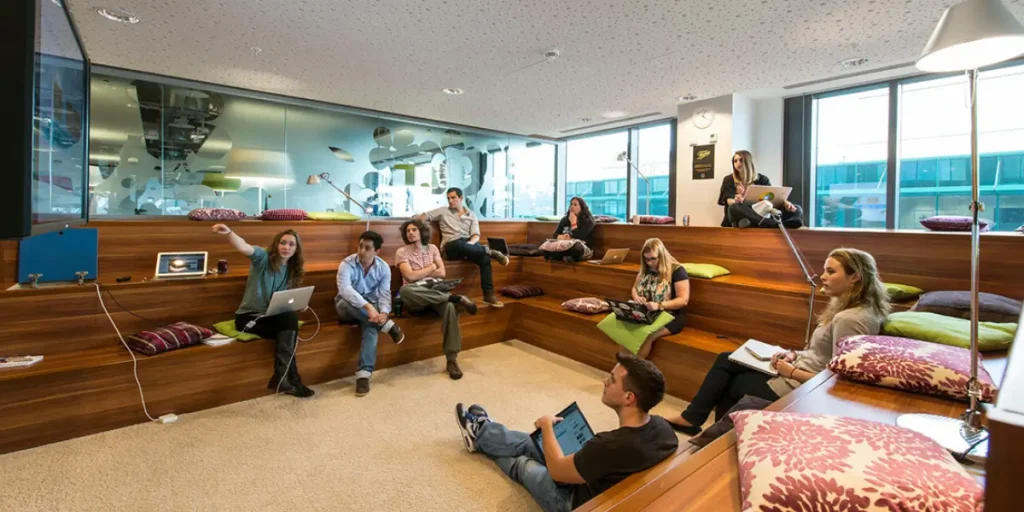
Office Designs that Connect: Experiential
Experiential office designs emphasize temporary, unconventional features that advocates inclusivity and enhance productivity. These designs focus on creating spaces that engage employees and encourage interaction, allowing for flexible workspaces that adapt to diverse needs.
Here are the key features of experiential office designs:
- Playful Features
- Customizable lighting
- Flexible furniture
- Comfortable common areas
- Wellness Spaces
- Dedicated areas for relaxation and mental breaks
- Natural materials
- Comfortable furnishings
- Spatial Layout
- Open-plan designs
- Zones that enhance communication and shared experiences
- Interactive Elements
- Fun additions like football tables and yoga rooms
- Shared spaces designed for team bonding and engagement
- Modular Design
- Movable furniture to support changing needs
- Adjustable partitions for customizable privacy
- Layouts that remain flexible in a fast-paced environment
Final Thoughts
An office isn’t just where work happens, it’s where ideas grow, teams connect, and culture takes shape. The right design can bring all of that to life
If you’re thinking of reworking your space, start with what matters most: your people.
Let’s design something that works for them.
