

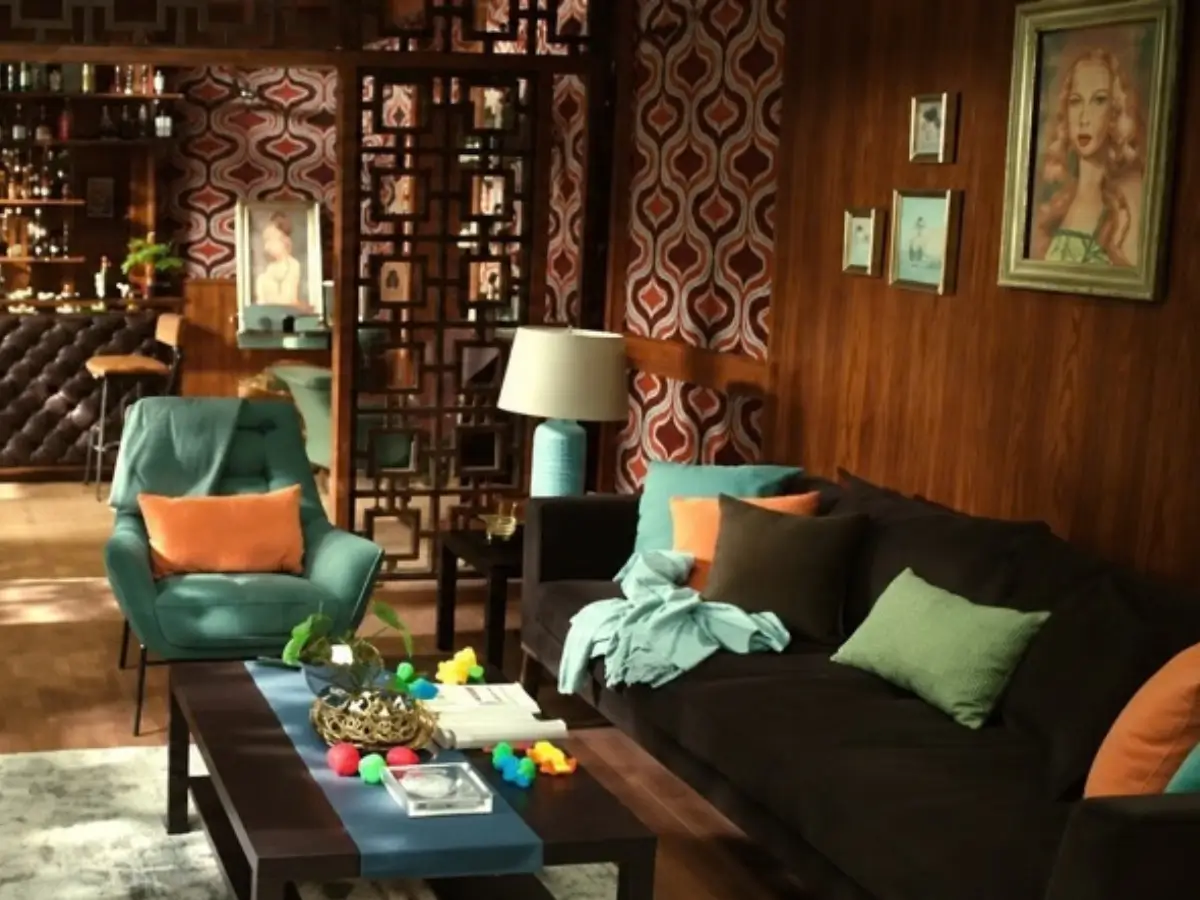
Interior Design and Set Design: A Shared Language
Interior design and set design have a strong common ground: both create spaces that reflect the personality, lifestyle, taste, and level of luxury of the user or character.
The difference is that interior design focuses on functionality and how people live or work in a space, while set design focuses on creating a visual environment that supports the story, establishes character, and evokes a specific feeling. Ultimately, both use space as a tool for visual storytelling, but for different purposes.
How Can a Space Communicate a Story or Emotion?
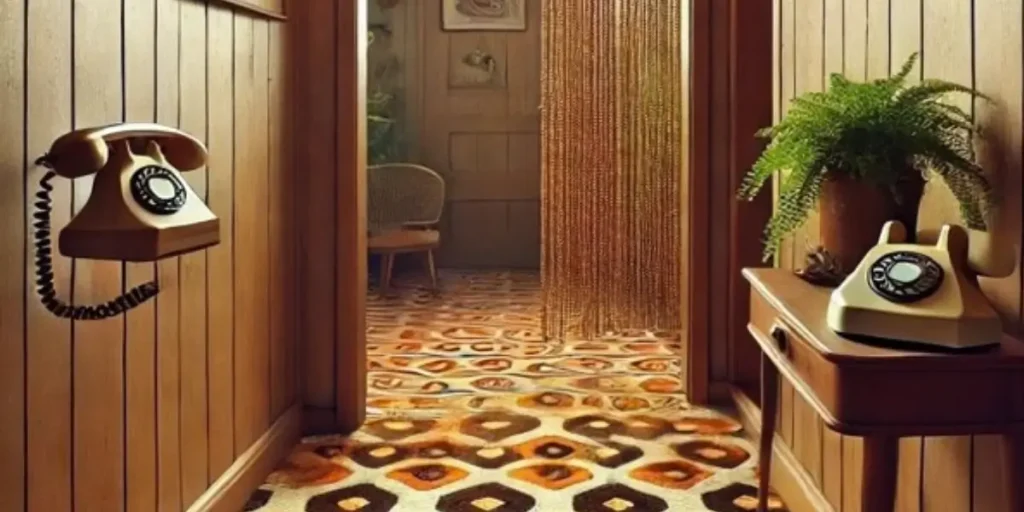
A space can communicate a story or emotion through its materials, furniture, lighting, color, and composition.
Materials can immediately suggest whether a space feels old, luxurious, warm, cold, or even unsettling. Furniture reflects the character’s personality, lifestyle, and the function of the space, while small details and objects can provide clues about the story or the people who inhabit it.
Lighting plays an important role in shaping how all these elements are perceived. It can change the atmosphere, emphasize certain details, create depth, and influence how both the space and the human characters within it are experienced.
Color then brings everything together by establishing and reinforcing the overall mood.
When these elements are carefully composed, the space becomes more than just a
background, it becomes part of the storytelling and helps the audience understand the
emotion and narrative without relying on dialogue.
Creating a Unified Visual Identity
One important lesson from filmmaking is how different spaces within the same movie can remain visually connected and maintain a unified identity.
Even when two spaces represent different characters, lifestyles, or completely different worlds, they can still share certain visual elements, materials, colors, or an overall mood that connects them to the same story and gives the audience a consistent feeling.
The same principle can be applied to interior design. In a complete project, different spaces may have different functions and should reflect the personalities and needs of their.
The Relationship Between Interior Design and Cinematic Storytelling users, but they should still feel like part of the same project. The designer should create a consistent visual language and atmosphere throughout the spaces, while allowing each area to have its own character. This balance between individuality and visual continuity is what makes the overall project feel cohesive and intentional.
The Influence of Cinema on Interior Design Trends
I believe cinema will continue to influence interior design trends, especially as the boundaries between entertainment, branding, and design become more connected.
We already see commercial spaces recreating or referencing iconic movie sets like Barbie and
Friends as part of collaborations, marketing campaigns, and creating memorable experiences for visitors.
At the same time, movies and series can inspire residential users by introducing new design styles, colors, furniture, and atmospheres that people connect with and want to bring into their own homes.
Cinema has a strong ability to influence how people perceive and experience spaces, so I believe its impact on interior design will continue to grow.
The Evolution of Interior Design in Cinema
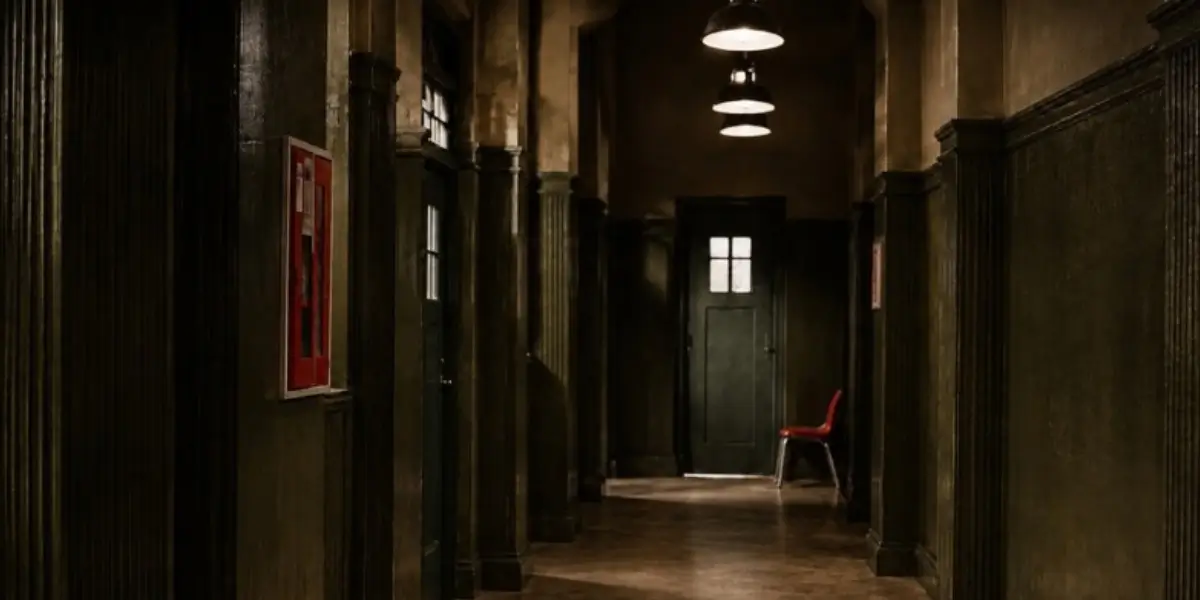
I think interior design in movies has evolved as our understanding of human psychology has become deeper. As people became more aware of emotions, personality, and the complexity of the human mind, this depth started to be reflected more strongly in the design of film locations.
Today, spaces are not just backgrounds for the story; they can reveal a character’s personality, emotional state, memories, and inner conflicts. Through the visual language of the space such as materials, colors, lighting, furniture, and composition the audience can feel and understand the character on a deeper level, sometimes without any dialogue like “الفيل الأزرق , ﻣﺎ وراء اﻟﻄﺒﯿﻌﺔ”
The Return of Old Movie Design Trends
Yes, definitely. Many design trends seen in older movies are becoming popular again today, especially retro and mid-century styles. They appear in movies and video clips. We are seeing a return to bold colors, curved furniture, rich wood, patterned wallpapers, vintage lighting, and Art Deco details.
Islamic Architecture in Cinema
Some of the most interesting interior styles in cinema are those inspired by Islamic architecture, particularly the Mamluk, Ayyubid, and Tulunid eras. What makes them fascinating is that these architectural elements can appear either in their original historical settings or be used as film locations to represent different periods or even imaginary worlds.
The richness of the details such as arches, courtyards, geometric patterns,
ornamentation, mashrabiyas, and traditional materials creates a strong visual identity and atmosphere. These spaces can represent a specific historical period while also creating feelings of mystery, grandeur, and cultural depth.
How Society and Lifestyle Shape Spaces on Screen
Changes in society and lifestyle have strongly influenced the spaces we see on screen. As the way people live, work, communicate, and interact has changed, film spaces have evolved to reflect these changes.
These changes also contribute to cinematic storytelling. A character’s environment can reveal their lifestyle, values, social background, and relationships without the need for dialogue. For example, an open-plan home, a home office, or a multifunctional space can reflect modern ways of living, while the organization, objects, and details within the space can reveal the character’s personality and emotional state.
In this way, the space becomes part of the narrative. It does not simply show where the story takes place; it helps communicate who the characters are and how society has shaped them, allowing the audience to understand the story through the visual environment.
