
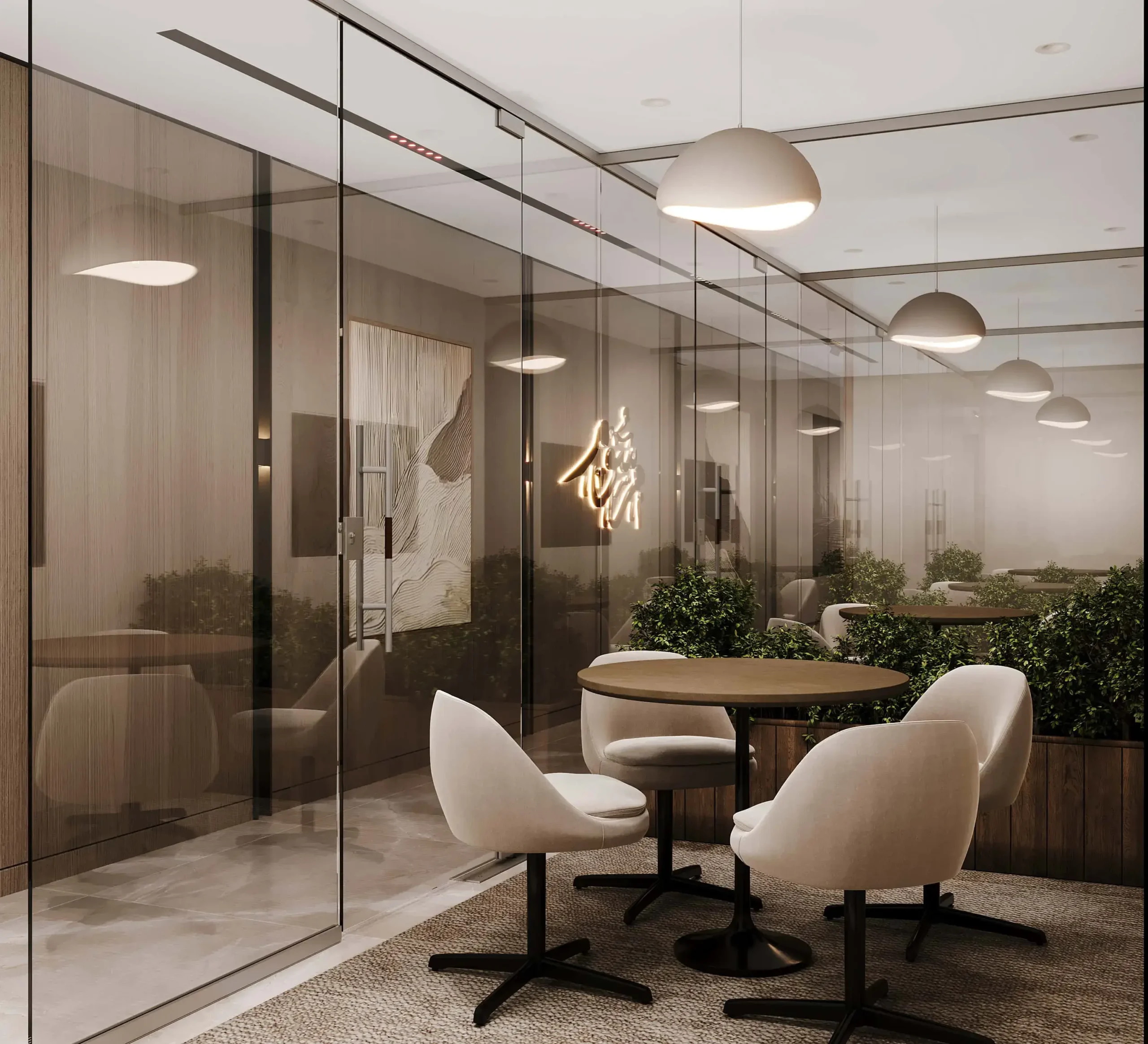
Modern office interior design is no longer just a visual trend or an attempt to keep up with what is considered contemporary. Today, it has become an essential part of how businesses operate, how employees interact with one another, and how they move through and experience the workplace. Successful modern office interior design is not limited to attractive finishes or elegant aesthetics. Instead, it begins with a deep understanding of daily business operations and the practical use of every square meter within the workspace.
When discussing modern office interior design, or what many describe as a contemporary office design, the focus extends far beyond appearance. It is about creating a complete workplace experience that solves common challenges such as poor lighting, inefficient space planning, visual fatigue, and layouts that reduce employee productivity. Many offices look impressive in photographs, yet fail to deliver the same level of functionality during everyday operations.
In this guide, we explore the latest trends shaping modern office interior design, the essential design principles behind productive work environments, and the practical elements that transform offices into efficient, inspiring spaces. We also explain how SKETCHURE translates these concepts into functional workplace solutions that reflect each company’s identity while supporting long-term business performance.
Explore Our Office Interior Design ProjectsModern Office Interior Design Trends for 2026
Office design trends should never be treated as a collection of styles to copy without purpose. Every design direction reflects a different philosophy about how people work, collaborate, and use their workplace throughout the day. The right solution depends on several key factors, including the company’s business activities, workplace culture, team size, workflow, and the way employees interact with the office environment.
Choosing the right office space design is therefore a strategic decision rather than a purely aesthetic one. With these considerations in mind, let’s explore the leading trends shaping modern office interior design in 2026.
1. Minimalist Office Design: Simplicity with Purpose
Minimalism is not about creating empty spaces. Instead, it focuses on removing anything that does not contribute to the daily work experience. The objective is to create a workplace that feels visually organized, easy to navigate, and free from unnecessary distractions.
This design approach typically incorporates:
- Clean architectural lines.
- Neutral, calming color palettes.
- Hidden storage solutions.
- Carefully selected furniture.
- Minimal decorative elements.
Minimalist workplace design is particularly effective in environments requiring sustained concentration, such as technology companies, consulting firms, and administrative offices where employees spend long hours performing focused tasks.
However, successful minimalism requires balance. When simplicity is taken too far, offices may appear cold or impersonal. Designers often introduce natural wood, textured finishes, soft fabrics, or carefully selected décor to create warmth without compromising clarity.
2. Industrial Office Design: A Bold Workplace Identity
Industrial design continues to be one of the most influential directions in commercial interior design, especially among creative agencies, startups, and technology companies.
Its defining features include:
- Exposed concrete surfaces.
- Visible structural steel.
- Open ceilings.
- Exposed ductwork and piping.
- Raw construction materials.
The objective is to create an authentic, modern workplace that communicates transparency, creativity, and innovation.
Despite its visual impact, industrial office interior design requires thoughtful execution. Excessive use of hard materials can increase noise levels, reduce acoustic comfort, and create visual fatigue during long working hours.
To achieve a more balanced environment, designers frequently combine industrial finishes with:
- Warm lighting.
- Natural timber.
- Upholstered furniture.
- Indoor greenery.
- Soft acoustic materials.
This combination creates a workspace that feels both contemporary and comfortable.
3. Smart Offices: Technology as Part of the Workplace Experience
Smart office design is not about filling the workplace with technology. Instead, it integrates digital solutions that improve efficiency, flexibility, and everyday operations.
Technology becomes valuable when it solves practical workplace challenges, including:
- Meeting room scheduling.
- Intelligent lighting control.
- Automated temperature management.
- Hybrid collaboration systems.
- Flexible workspace management.
In today’s modern workplace, digital infrastructure is considered an essential component of the overall office planning process rather than an afterthought.
Successful projects therefore include early planning for:
- Power distribution.
- Data network infrastructure.
- Cable management systems.
- Smart building technologies.
- Future scalability.
Integrating these elements during the initial planning phase results in cleaner spaces and more efficient long-term operations.
4. Biophilic Office Design: Bringing Nature into the Workplace
Among the fastest-growing trends in modern office interior design is biophilic design, which strengthens the relationship between employees and the natural environment.
This concept goes far beyond simply adding plants to the office. Instead, it incorporates natural elements throughout the workplace, including:
- Abundant daylight.
- Indoor vegetation.
- Natural materials.
- Improved ventilation.
- Organic textures.
- Visual connections with nature.
Research consistently shows that biophilic design can contribute to:
- Reduced workplace stress.
- Higher employee satisfaction.
- Improved concentration.
- Better mental well-being.
- Increased employee productivity.
As a result, many organizations now consider biophilic principles an essential component of contemporary office space design, particularly in industries that depend heavily on creativity and knowledge work.
Ultimately, there is no universally “best” office design trend. The most effective solution depends on the specific workplace, its operational needs, and the people using it every day.
If you would like to understand how these design approaches influence project budgets, construction decisions, and investment value, explore SKETCHURE’s guide to interior design costs and price per square meter, where we explain how thoughtful design becomes a long-term business investment.
How Modern Office Interior Design Changes Based on Space Size?
One of the most common mistakes in modern office interior design is assuming that every workspace should follow the same design formula.
A layout that performs exceptionally well in a large open office may become inefficient inside a compact workplace that requires greater privacy. Successful office planning always begins by understanding several essential factors:
- Total available space.
- Number of employees.
- Nature of daily operations.
- Circulation patterns.
- Collaboration requirements.
Only after these factors are evaluated can designers create a workspace that truly supports business performance.
1. Small Offices: Every Square Meter Matters
Designing small administrative offices is less about creating impressive visuals and more about maximizing functionality within limited space.
Successful office layout strategies often include:
- Vertical storage solutions.
- Multi-functional furniture.
- Reduced visual clutter.
- Clearly defined circulation paths.
- Efficient workspace planning.
Lighting and color selection also play a major role in making compact offices feel larger, brighter, and more comfortable.
A common mistake is attempting to replicate layouts designed for much larger offices. This often results in overcrowded interiors, restricted movement, and reduced workplace efficiency.
2. Open Office Design: Collaboration Requires Structure
Open-plan offices have become a preferred choice for many organizations because they encourage communication, teamwork, and faster decision-making. However, simply removing walls does not guarantee a productive environment. Without proper workspace planning, an open office can quickly become noisy, distracting, and unsuitable for focused work.
Modern office interior design approaches open-plan environments with greater balance by incorporating:
- Quiet zones for individual work.
- Acoustic solutions that minimize noise.
- Team neighborhoods organized according to collaboration needs.
- Clear circulation paths between departments.
- Flexible spaces that support both teamwork and privacy.
A well-designed collaborative workspace creates opportunities for interaction without compromising concentration, resulting in a healthier and more efficient working environment.
3. Home Office Design: Creating Separation Between Work and Life
As remote and hybrid work continue to reshape the modern workplace, home offices have become an essential part of office space design. The primary challenge is rarely the available space itself but creating a clear psychological and functional separation between personal life and professional responsibilities.
An effective home office should include:
- A visually defined work area.
- Comfortable, ergonomic office furniture for extended use.
- Proper lighting to reduce eye strain.
- Minimal distractions.
- Smart storage solutions that maintain organization.
Even in compact apartments, thoughtful office planning can transform a small corner into a productive workspace that supports focus throughout the day.
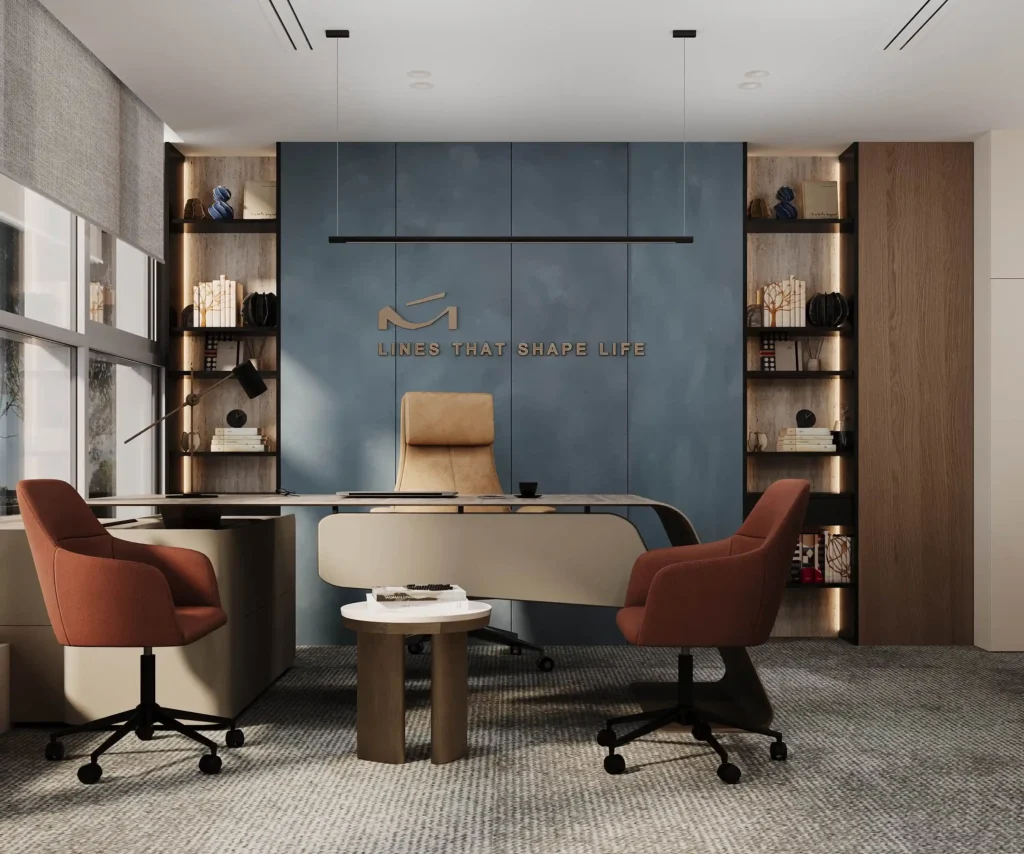
4. Executive Office Design: A Space That Reflects Leadership
An executive office should represent more than luxury. It should communicate leadership, professionalism, and strategic decision-making while supporting the executive’s daily responsibilities.
Successful executive office designs typically emphasize:
- Visual and acoustic privacy.
- A dedicated meeting area for private discussions.
- Efficient space organization.
- Premium yet understated materials.
- A balanced atmosphere that inspires confidence without unnecessary extravagance.
Many organizations are moving away from overly ornate executive offices in favor of clean, sophisticated interiors that align with contemporary commercial interior design principles.
Ultimately, successful modern office interior design is determined not by the size of the office but by how effectively every square meter serves the people who use it.
Essential Elements of Successful Modern Office Interior Design
Outstanding office environments are never the result of a single design decision. Instead, they combine multiple elements that work together to create a seamless and highly functional workplace experience.
Interestingly, many of the most influential design components are those employees rarely notice consciously, yet they significantly impact comfort, efficiency, and productivity every day.
1. Lighting: Supporting Focus, Comfort, and Energy
Lighting is much more than a practical necessity. It directly affects employee well-being, concentration, and overall workplace performance.
Successful lighting design combines natural daylight with carefully planned artificial illumination to reduce glare, harsh shadows, and visual fatigue.
Each area of the office requires its own lighting strategy. For example:
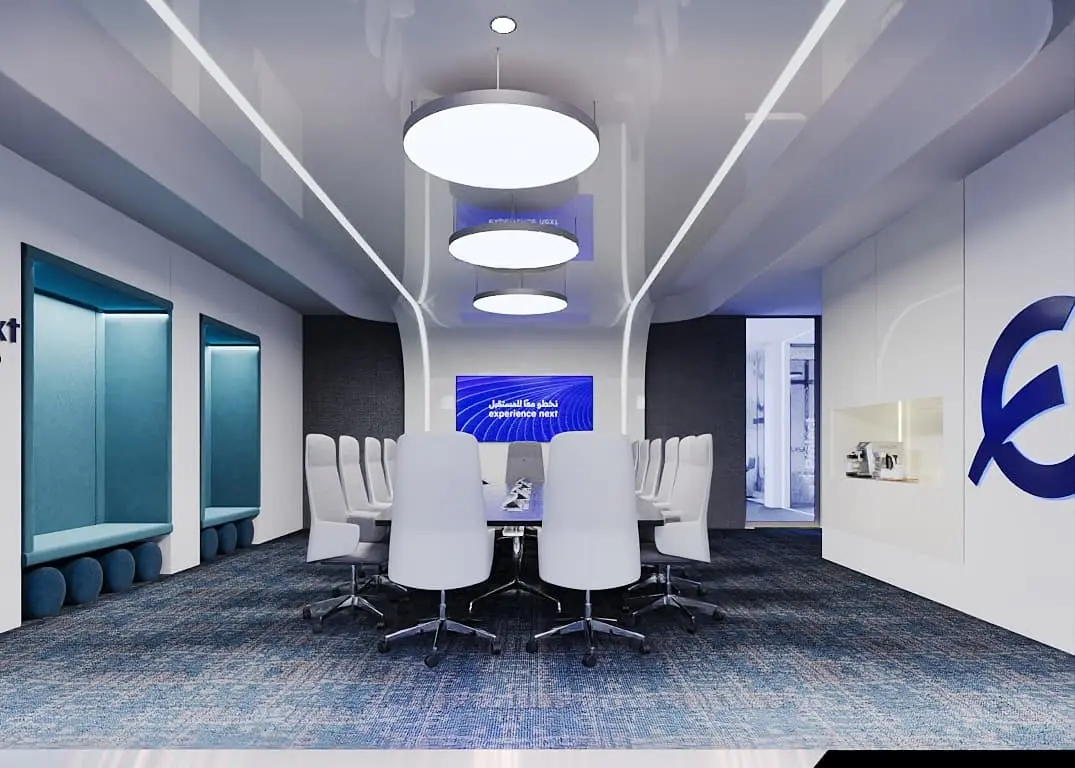
- Meeting rooms benefit from balanced, adjustable lighting.
- Individual workstations require focused task lighting.
- Collaboration zones need brighter, more energetic illumination.
- Break areas benefit from softer, relaxing light.
A well-planned lighting strategy contributes significantly to employee productivity and creates a more comfortable working environment.
2. Color Selection: Reinforcing Brand Identity and Workplace Experience
Color influences far more than aesthetics. It affects mood, visual comfort, workplace energy, and even how employees perceive their surroundings.
For this reason, professional office interior design does not rely solely on trends or personal preferences. Instead, color palettes are selected according to:
- The company’s brand identity.
- The nature of daily work.
- Desired emotional atmosphere.
- Levels of concentration required within each department.
Neutral backgrounds combined with carefully positioned brand colors often produce environments that feel both professional and memorable.
3. Office Furniture: Function Before Appearance
Furniture is one of the most important investments in any modern office interior design project because employees interact with it throughout the working day.
High-quality ergonomic office furniture should provide:
- Long-term comfort.
- Healthy posture support.
- Ease of movement.
- Durability.
- Adaptability to changing workplace needs.
Many organizations now invest in adjustable desks, flexible seating systems, and modular furniture that can be reconfigured as teams grow or business requirements evolve.
4. Office Circulation: The Invisible Driver of Workplace Efficiency
One of the defining characteristics of exceptional office layout is that movement feels natural and effortless.
Poor circulation planning creates:
- Employee interruptions.
- Visual clutter.
- Congested walkways.
- Reduced operational efficiency.
- Unnecessary distractions.
Professional workspace planning organizes circulation so employees can move smoothly between departments while maintaining clear separation between focused work areas, collaboration zones, and visitor spaces.
5. Technology Infrastructure: The Hidden Foundation of Modern Offices
Technology has become an integral component of modern workplace design rather than an optional addition.
A well-planned infrastructure includes:
- Strategic placement of power outlets.
- Reliable data connectivity.
- Hybrid meeting room technology.
- Organized cable management.
- Scalable systems that support future expansion.
Integrating these systems during the early stages of office planning prevents costly modifications and maintains a clean, organized interior.
6. Sustainability and Long-Term Maintenance
Great office design should continue performing well long after project completion.
For this reason, sustainable commercial interior design focuses on:
- Durable materials.
- Easy maintenance.
- Energy-efficient systems.
- Environmentally responsible material selection.
- Long-term operational value.
A sustainable office reduces maintenance costs while supporting healthier workplace environments and improving long-term return on investment.
Ultimately, these elements should never be viewed independently. Together, they create a workplace ecosystem that directly influences employee experience, operational efficiency, and overall business performance.
Even when every design element is present, however, poor planning or execution can still undermine the final result.
Related Articles
Office Zones Explained: Full guide
Discover SKETCHURE’s Meeting Room Design Solutions
Common Mistakes That Weaken Modern Office Interior Design
Even the most creative office concepts can fail when they are executed without careful planning. In many cases, the problem is not the quality of the materials or the visual appeal of the space, but rather a series of small decisions that negatively affect the daily workplace experience.
These mistakes impact far more than aesthetics. They influence employee comfort, operational efficiency, concentration, workflow, and even the impression the company leaves on clients and visitors.
Understanding these common pitfalls is essential, not only to avoid them but also to appreciate how thoughtful modern office interior design directly contributes to business success.
1. Prioritizing Decoration Over Functionality
One of the most frequent mistakes is trying to create an office that looks visually impressive while overlooking its practical purpose.
Successful modern office interior design is built around functionality, clarity, and organization rather than excessive decorative elements. When an office becomes overloaded with colors, finishes, or ornamental details, the workspace often feels visually overwhelming and makes it more difficult for employees to focus.
The goal should always be balance—a workplace that is visually appealing, organized, and aligned with the company’s identity without creating unnecessary distractions.
2. Choosing Furniture Based Only on Appearance
Office furniture may look attractive in a showroom or promotional photographs, yet perform poorly during everyday use.
Uncomfortable chairs, impractical desks, or poorly designed storage systems directly affect employee well-being, especially in workplaces where people remain seated for extended periods.
Professional office space design always prioritizes ergonomic office furniture that offers:
- Long-term comfort.
- Functional flexibility.
- Ease of movement.
- Durability.
- Support for daily operational needs.
Furniture should be selected according to how employees actually work rather than purely for visual appeal.
3. Poor Lighting Design
Lighting is frequently underestimated despite being one of the most influential components of any workplace.
Insufficient or poorly distributed lighting can lead to:
- Eye strain.
- Reduced concentration.
- Lower energy levels.
- Employee fatigue.
- A less comfortable working environment.
Professional lighting design balances natural daylight with artificial illumination while adapting light intensity to the specific function of each area, whether it is a meeting room, collaborative workspace, private office, or reception area.
4. Ignoring Brand Identity
An office represents much more than a place where employees work—it is a physical expression of the company’s brand.
When commercial interior design fails to reflect corporate identity, the workplace often feels generic regardless of how modern or luxurious it appears.
Brand identity should be reflected through:
- Spatial organization.
- Material selection.
- Color palette.
- Furniture style.
- Overall workplace experience.
Rather than relying solely on logos or graphics, successful office design communicates brand values through every design decision.
5. Applying Design Concepts That Do Not Fit the Space
Another common mistake is copying successful office designs without considering the unique characteristics of the available space.
A layout that performs well in a spacious open-plan office may be completely unsuitable for a compact workplace requiring greater privacy or different operational workflows.
Every successful office planning process begins with understanding:
- Available floor area.
- Business activities.
- Team size.
- Privacy requirements.
- Daily circulation patterns.
Only then can designers create an efficient and highly functional workplace.
Ultimately, great modern office interior design is not about following trends—it is about making informed decisions that support the people using the office every day.
Contact us to Design Your Modern Office Professionally
How SKETCHURE Creates Modern Office Interior Design Projects
Many office projects begin with excellent ideas but fail to deliver the same quality after construction.
This usually happens because the design process focuses primarily on aesthetics while overlooking how employees actually work, collaborate, and use the space every day.
At SKETCHURE, modern office interior design is treated as a complete business solution rather than simply a design style. Every project starts with understanding workplace operations and concludes with an environment that supports efficiency, flexibility, and long-term performance.
Step 1: Understanding How Your Business Works
Before discussing colors, furniture, or finishes, SKETCHURE begins by analyzing how the organization functions.
This includes evaluating:
- Daily operational activities.
- Team collaboration.
- Required privacy levels.
- Meeting frequency.
- Employee movement throughout the office.
- Space utilization during different working hours.
A technology startup, for example, requires a completely different workplace design strategy than a law firm or a financial consulting company.
Step 2: Transforming Business Needs into an Efficient Workplace
Once operational requirements are clearly understood, the planning stage begins.
Rather than simply dividing departments, SKETCHURE develops an office layout that improves workflow and supports everyday operations.
This process includes:
- Organizing departments according to collaboration needs.
- Reducing unnecessary circulation.
- Defining dedicated focus and meeting zones.
- Balancing openness with privacy.
- Creating intuitive movement throughout the office.
The objective is not merely to produce an attractive office but to create a workspace that employees naturally enjoy using.
Step 3: Selecting Elements That Improve Daily Performance
Every design decision inside a modern workplace should serve a practical purpose.
For this reason, SKETCHURE carefully selects:
- Ergonomic office furniture based on user comfort.
- Lighting systems tailored to each functional area.
- Durable materials that simplify maintenance.
- Smart technologies that support everyday operations.
Great office interior design is measured not only by how it looks on opening day but by how effectively it continues to perform over many years.
Step 4: Delivering the Vision Through Professional Execution
Execution is one of the most critical stages of every project.
Even exceptional designs can lose their value if implementation lacks precision.
To maintain quality throughout construction, SKETCHURE oversees:
- Coordination of all execution phases.
- Quality control of finishes.
- Compliance with the approved design vision.
- Resolution of on-site challenges without compromising project quality.
This approach ensures that the completed office accurately reflects both the original concept and the client’s operational requirements.
Selected Office Interior Design Projects
Ejada Cairo: This project was designed to create a balanced environment that supports both collaboration and focused work while improving team circulation and operational efficiency.
Marsoom: The objective was to develop a contemporary workplace reflecting the company’s brand identity through clearly organized administrative and social spaces.
BasharSoft: This office was designed as a flexible, creative environment that encourages collaboration while maintaining efficient circulation and comfortable day-to-day functionality.
These projects demonstrate that successful modern office interior design depends not only on creative ideas but also on the ability to transform those ideas into practical environments that support employees every day.
Design Your Modern Office with SKETCHUREModern Office Interior Design Across Egypt, the UAE, Saudi Arabia, Oman, and Qatar
SKETCHURE delivers modern office interior design services through its presence in Egypt and the United Arab Emirates while supporting businesses throughout Saudi Arabia, Oman, and Qatar.
This regional experience provides a deep understanding of the operational, cultural, and commercial requirements of organizations across different markets.
Whether designing:
- A corporate headquarters in Egypt,
- A premium office in the UAE,
- A professional workplace in Saudi Arabia,
- A business office in Oman,
- Or a commercial workspace in Qatar,
SKETCHURE develops customized workplace solutions rather than relying on standardized design templates. Every project balances operational efficiency, brand identity, user experience, and long-term flexibility.
Conclusion: Great Design Is Measured by Performance
The best offices are not simply those that look beautiful—they are the ones that help people perform better every day.
Every design decision, from office layout and lighting design to furniture selection and circulation planning, influences how employees experience the workplace.
Successful modern office interior design transforms office space into an environment that is productive, adaptable, comfortable, and built for long-term business growth.
At SKETCHURE, every project is approached as a strategic investment, delivering carefully planned commercial interior design solutions that combine functionality, aesthetics, and operational excellence.
Contact SKETCHURE to Design Your Modern OfficeFrequently Asked Questions
Learn more about the most common questions regarding modern office interior design and how to choose the right workplace solution.
1. What is the difference between modern and traditional office interior design?
Modern office interior design emphasizes simplicity, functionality, flexibility, and efficient space utilization, while traditional office design typically features heavier decorative elements, classic materials, and more formal layouts.
2. Does modern office interior design improve employee productivity?
Yes. A thoughtfully designed workplace can:
- Reduce distractions.
- Improve employee comfort.
- Enhance communication.
- Simplify movement.
- Create a more organized and productive working environment.
3. What are the best colors for a modern office?
The ideal color palette depends on the company’s brand identity and operational requirements. In most cases, neutral tones serve as the foundation, complemented by carefully selected brand colors that add personality without overwhelming the workspace.
4. Can an existing office be transformed into a modern workspace?
Absolutely. Many traditional offices can be successfully modernized by:
- Reorganizing the layout.
- Improving lighting.
- Upgrading office furniture.
- Simplifying visual elements.
A complete renovation is not always necessary.
5. How do I choose the right office design for my business?
The most suitable design depends on several factors, including:
- Office size.
- Business activities.
- Number of employees.
- Privacy requirements.
- Daily workflow.
- Future growth plans.
A professional office planning process evaluates these factors before any design decisions are made.
6. Does SKETCHURE offer office renovation services?
Yes. SKETCHURE provides comprehensive office renovation and refurbishment services, recommending the most appropriate solutions based on the existing condition of the workspace and each client’s operational goals.
Contact SKETCHURE today to discuss your office project and discover the right design solution for your business.
