
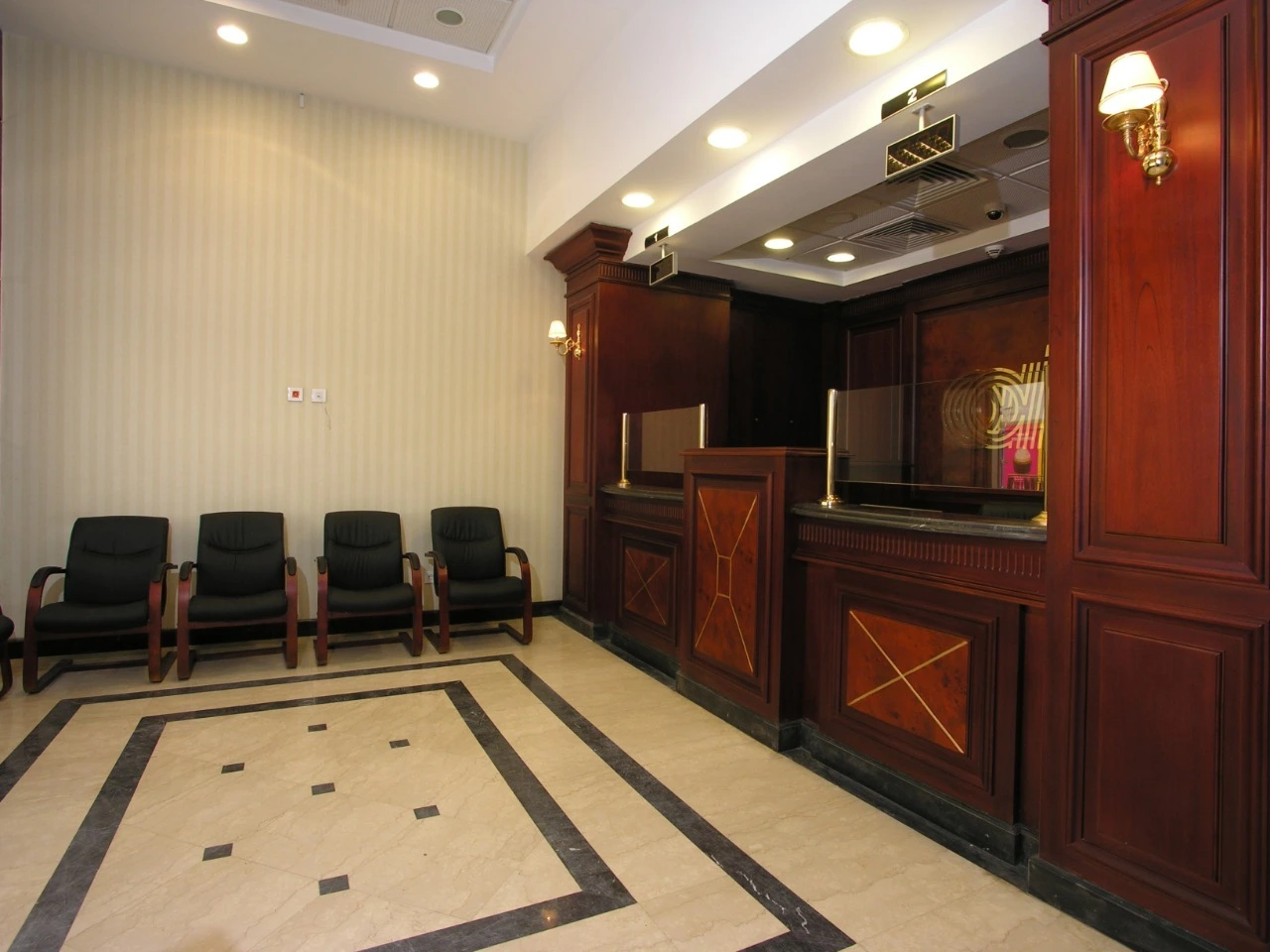
A bank branch is not just a place where transactions happen; it is a space where people assess credibility, privacy, efficiency, and professionalism, often within seconds of walking in. That is why bank interior design has a direct impact on how customers experience the brand and how confidently the space performs in daily use.
The strongest banking interiors are not defined by appearance alone. They are shaped by smart zoning, secure planning, durable materials, and a layout that supports both customer comfort and operational control. When those elements work together, the branch feels clearer, safer, and more trustworthy from the start.
So, let’s break down the design decisions that make a bank interior feel functional, secure, and aligned with the level of the institution it represents.
Explore SKETCHURE Office ProjectsWhat Is Bank Interior Design and Why Does It Matter?
A bank interior needs to do more than look professional. It has to support security, reduce friction, guide customer movement, and create an environment that feels reliable the moment people enter. That is what gives bank interior design its real value.
The most effective banking spaces usually get three things right from the start: they reinforce trust, support safe operations, and make the customer journey easier to understand.
#1 Security: A Space That Protects Without Feeling Intimidating
Security is one of the defining requirements in bank branch interior design. The layout needs to protect staff, customers, cash handling areas, and sensitive operations, while still allowing the branch to feel welcoming rather than stressful. Good design helps security measures feel integrated into the environment instead of visually overpowering it.
#2 Brand Trust: An Environment That Feels Stable and Credible
Banking spaces carry higher expectations than many other commercial interiors. Customers look for visual cues that signal professionalism, consistency, and care. In bank room design, that often comes through controlled materials, orderly layouts, clear signage, and a finish level that feels dependable rather than decorative.
#3 Customer Experience: Clarity Matters as Much as Comfort
A good banking environment helps people understand where to go, where to wait, where to ask for support, and where private conversations happen. When the branch is easier to read, the experience feels smoother and more reassuring. That is especially important in busy branches where confusion quickly turns into frustration.
Core Elements of Bank Branch Interior Design
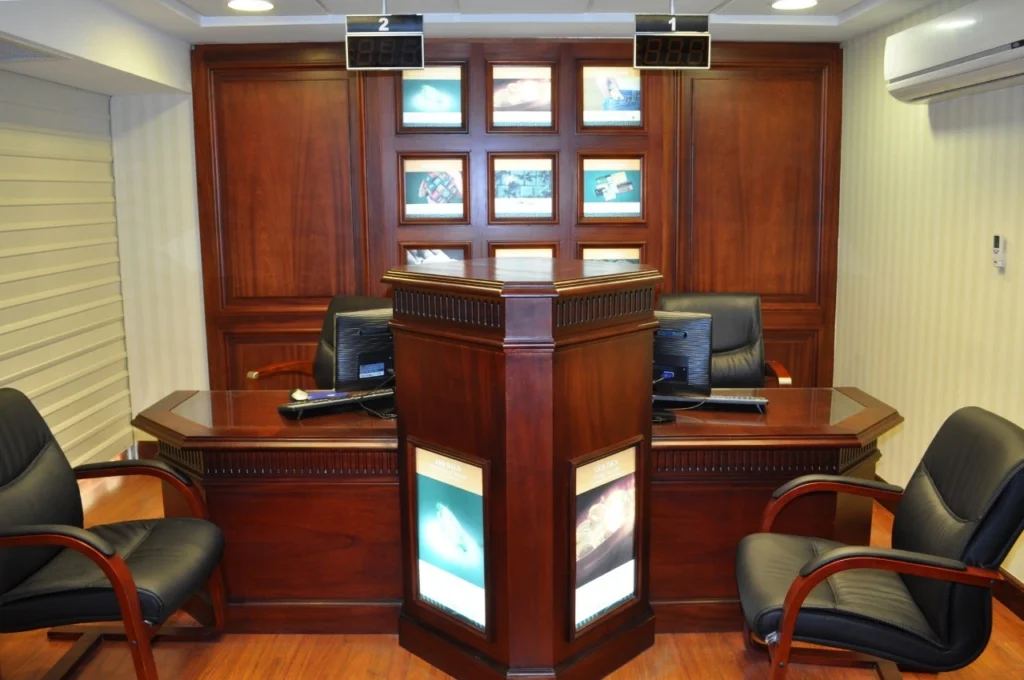
The strongest bank branches start with the fundamentals. Before style can make an impact, the space needs clear zoning, smooth customer flow, and secure areas that support daily banking operations without disrupting the experience.
When those essentials are planned well, the branch feels more efficient, more controlled, and more trustworthy.
#1 Zoning: Clear Spaces for Clear Functions
In bank branch interior design, each area needs a defined role. Waiting zones, teller counters, self-service points, consultation rooms, staff-only spaces, and secure operational areas should feel clearly separated but still connected within one coherent plan. Strong zoning reduces confusion and helps the branch function more smoothly under pressure.
#2 Customer Flow and Transaction Areas: Designed to Reduce Friction
Customer flow shapes how efficient the branch feels. Entry points, queue areas, counters, and transaction stations should be positioned to reduce congestion and support natural movement. In smaller branches, this becomes even more critical, which is why small bank interior design often depends heavily on disciplined circulation planning and compact but effective service zones.
#3 Private Consultation Rooms and Secure Areas: Privacy with Control
Not every banking interaction should happen in open view. Loan discussions, account reviews, and financial consultations need privacy, while operational and cash-handling areas need tighter control. Good bank room design helps these spaces feel discreet, secure, and fully integrated into the wider branch environment.
Bank Office Interior Design for Administrative Areas
Behind the public-facing branch, the administrative side of the bank needs a different but equally considered design approach, often influenced by office styles that shape how teams work and interact. These spaces support internal decision-making, daily staff operations, and leadership functions that keep the branch running efficiently.
A strong banking interior, therefore, needs to work well on both sides of the customer journey: front-of-house and back-of-house.
Staff Workspaces: Efficient, Comfortable, and Easy to Manage
Staff areas in bank office interior design should support focus, accuracy, and smooth internal coordination. That means practical workstation layouts, sufficient storage, ergonomic furniture, and a level of acoustic control that helps teams work without unnecessary distraction.
Executive Offices: Professional Spaces for Leadership Functions
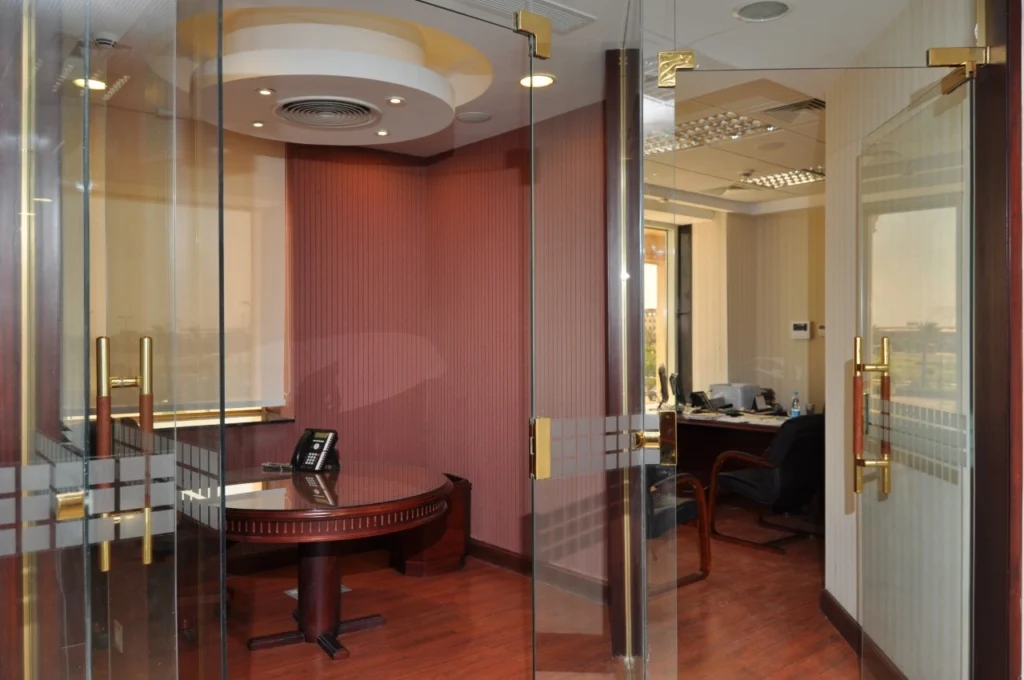
Executive and managerial offices within a bank should feel aligned with the institution’s level of professionalism. These spaces often need to balance authority with daily practicality, supporting focused work, confidential conversations, and client-facing meetings within one refined setting.
Meeting Rooms: Built for Internal Alignment and Client Discussions
Meeting rooms in bank interiors need to support more than formality. They should be equipped for internal strategy discussions, presentations, and private client meetings, with the right balance of privacy, lighting, comfort, and technology integration.
Materials, Finishes, and Security Integration in Bank Office Interior
Material choices in a bank interior carry more weight than aesthetics alone. They affect durability, maintenance, lighting quality, security coordination, and the overall sense of trust the space creates.
The best results usually come from choosing finishes that feel professional, wear well, and support the technical needs of the branch.
Durable Materials: Built for Daily Use and Long-Term Performance
Banks experience steady foot traffic and repeated daily use, especially in public-facing areas. In bank interior design, surfaces need to be durable, easy to maintain, and suitable for a professional environment. Flooring, wall finishes, counters, glass, and joinery should all be selected with longevity in mind.
Lighting: Supporting Visibility, Comfort, and Atmosphere
Lighting should help the branch feel bright, clear, and dependable. It also needs to support visibility at counters, consultation rooms, staff zones, and circulation areas. The right lighting improves comfort and functionality while helping the space feel more polished and secure.
Technology Systems: Security and Function Working Together
In bank office interior planning, technology needs to be integrated early rather than added later. Surveillance systems, access control, alarms, digital queue systems, screens, and service technology all need to work with the layout, not against it. When integrated well, these systems strengthen both operations and customer confidence.
Bank Interior Design Process and Execution
A successful bank interior depends on more than a strong concept. The final result relies on careful planning, compliance awareness, coordination, and delivery control from start to finish.
The most successful projects usually come down to three things: a clear design direction, disciplined execution, and strong project management.
1. Concept Development: Designing Around Real Banking Needs
The concept stage defines how the branch should work, feel, and represent the institution. In bank interior design, that means understanding customer volume, service types, privacy needs, staff workflow, and the image the bank wants to project across the branch.
2. Compliance: Planning with Security and Operational Requirements in Mind
Banking interiors need to respond to stricter operational demands than many other commercial spaces. Compliance considerations can affect zoning, secure rooms, access control, surveillance placement, and customer-service layouts. Addressing those requirements early helps avoid costly redesign later.
3. Project Management: Keeping Design Intent Intact During Delivery
Execution is where quality is either protected or diluted. In bank branch interior design, project management plays a major role in coordinating finishes, joinery, lighting, technology systems, and on-site implementation so the final space feels resolved, efficient, and ready for use.
What Affects Bank Office Interior Design Cost?
There is no single cost for a bank interior because every branch differs in size, layout condition, security scope, and level of customization. What matters most is understanding where the budget needs to work hardest, especially when evaluating overall commercial design cost.
In most banking projects, cost is shaped by the size of the branch, the amount of secure infrastructure required, and the overall scope of fit-out or renovation, all of which directly influence the final commercial design cost.
Size: Larger Branches Usually Mean More Complexity
The total area of the branch affects more than the material quantity. It also influences zoning complexity, circulation planning, lighting requirements, furniture needs, and the number of public and private spaces that need to be delivered.
Security Requirements: A Major Driver of Planning and Cost
Security integration can significantly affect the cost of bank office interior design. Access control systems, secure transaction zones, surveillance coordination, reinforced rooms, and controlled circulation all add technical and planning depth to the project.
Scope of Work: Fit-Out Level Changes the Budget
A light refresh and a full branch fit-out are not the same project. Budget shifts depending on whether the work includes ceilings, flooring, partitions, joinery, counters, lighting, mechanical upgrades, furniture, and integrated banking technology.
Discover Our Office Design ServicesWhy Choose SKETCHURE for Bank Interior Design?
Choosing a partner for bank interior design is about finding a team that understands how to balance customer confidence, daily operations, privacy, and security within one cohesive environment. Enters, SKETCHURE.
SKETCHURE’s Arab African International Bank
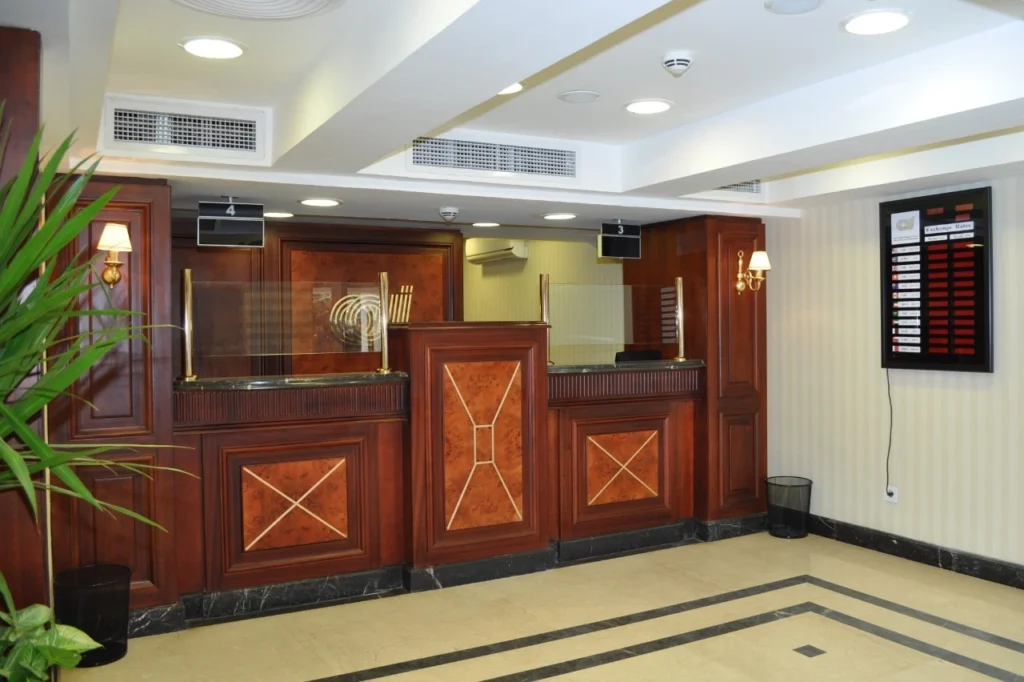
In the Arab African International Bank project, SKETCHURE translated those demands into a space shaped by controlled layout planning, refined material selection, and disciplined execution, bringing together the professionalism customers expect, the order staff need, and the level of finish a banking environment requires.
Sketchure’s Bank Interior Design Across Egypt, UAE, Saudi Arabia, Oman, and Qatar
SKETCHURE supports commercial interior projects from its presence in Egypt and the UAE, with regional coverage for banking spaces across Saudi Arabia, Oman, and Qatar. That regional reach guarantees that banks that want their interiors to deliver a consistent brand experience across multiple markets can do so without having to shift between design partners or risk quality inconsistency.
Banking Spaces, Designed with Purpose
A successful bank interior helps people feel secure, guides them through the space with clarity, and reinforces the professionalism of the institution behind it.
And when the time comes to shape a banking space that supports operations, strengthens trust, and represents your institution well, the right design partner can make all the difference.
Contact SKETCHURE Team