
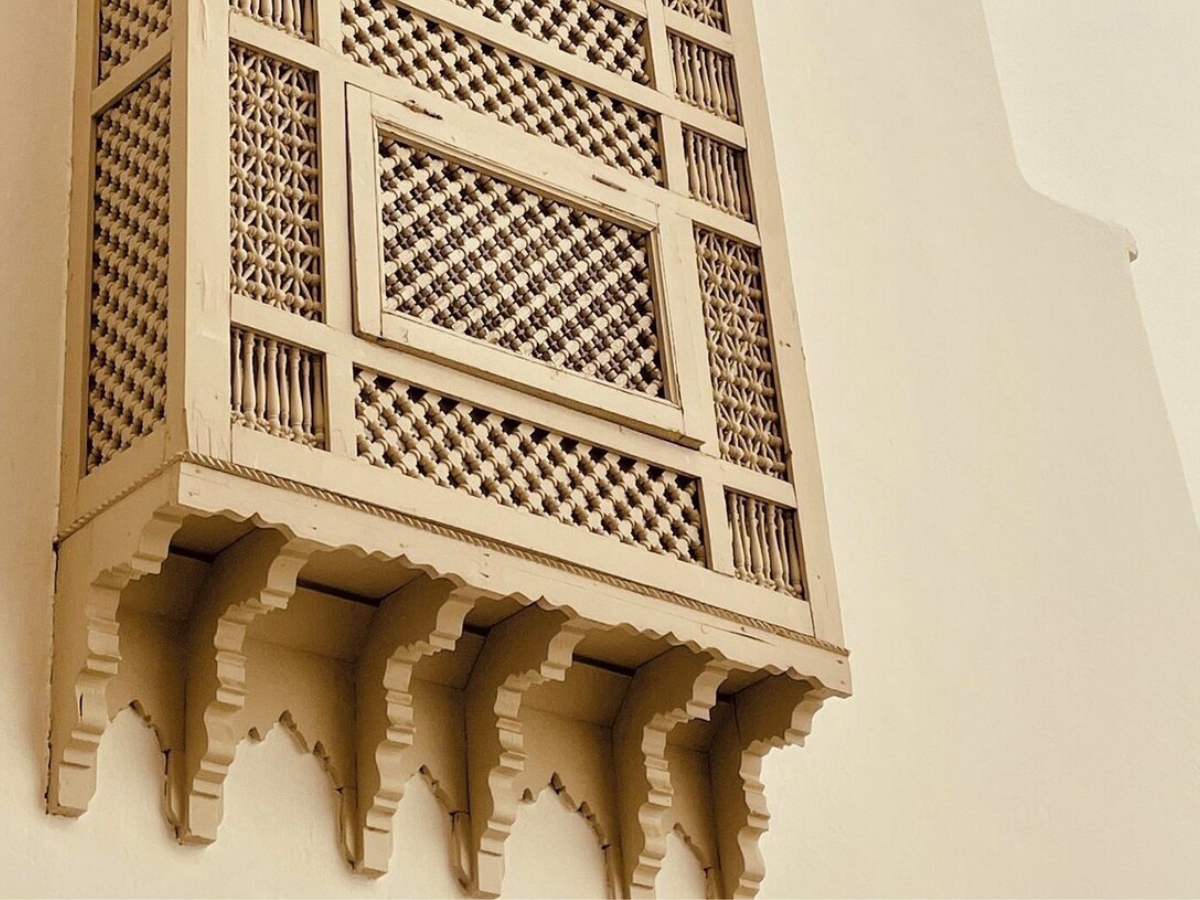
In celebration of the Islamic New Year, we reflect on timeless traditions that influence how we design, live, and connect with one another. The traditional Mashrabiya, a distinctive architectural element rooted in Islamic and Arab design, blends cultural, visual, and functional design. In this article, we reflect on its origin, dive into design details, tackle the modern integration of the Mashrabiya in today’s design culture, and understand why, to this day, it still appeals to designers and users.
Origin
The Mashrabiya, named after the Arabic word for refreshment “Mashrafa”, is a prominent symbol of Islamic architecture, blends beauty, function, and tradition. It originally acted as a cooling screen for water jars and later evolved into elaborate wooden window screens offering privacy, airflow, and shade, now replaced by window shades and AC.
Design
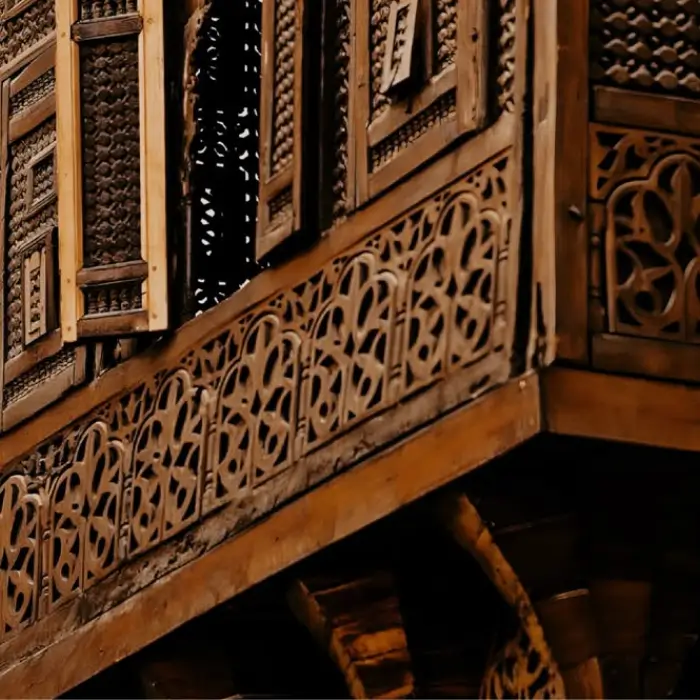
The Mashrabiya patterns are carefully designed, often reflecting complex geometric principles seen in Islamic art. In Islamic culture, these patterns symbolize the infinite nature of creation and the interconnection of nature. Although wood is the primary material, mashrabiyas have also been made from:
- Marble
- Stone
- Plaster
- Brick
The Mashrabiya also represents a key architectural philosophy: The understanding of opposites, known as ‘Juxtapositions’. It skillfully balances light and shadow, manages visibility and privacy, and today links tradition with innovation. This dual nature reflects the richness of Islamic architecture and continues to inspire modern architects.
Colour
While traditional Mashrabiyas are made of mainly wood, you will often find coloured glass integrated, commonly in sealed Mashrabiyas that open like a window.
You will find, in many cases, the colours on the glass of sealed Mashrabiyas reflected, within the geometric patterns of the Mashrabiya, in an aesthetic manner, which is why a lot of modern designers are tempted to incorporate coloured glass when designing modern-day Mashrabiyas
Modern Integration of Mashrabiya
The modern world demonstrates that true innovation often comes from reinterpreting tradition. As architects seek to blend modern design with local identity, the Mashrabiya is emerging as a natural solution, reimagined, worldwide.
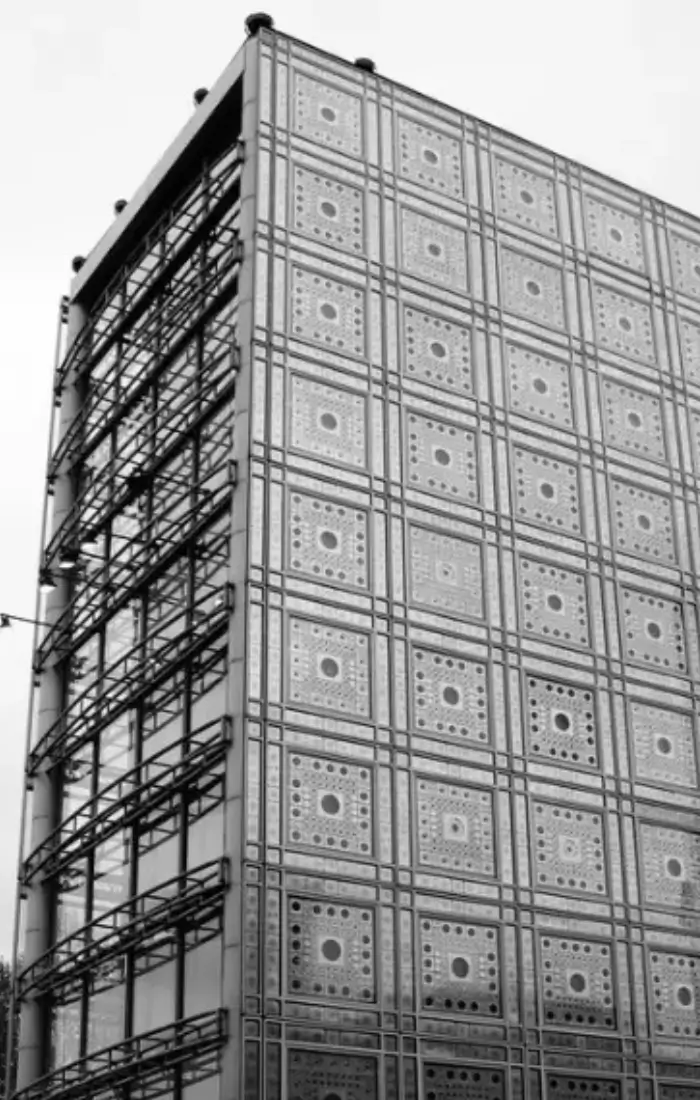
A key example of the mashrabiya’s modern revival is the “Institut du Monde Arabe” in Paris, designed by renowned architect Jean Nouvel. Drawing inspiration from traditional Islamic architecture, Nouvel reinterpreted the mashrabiya, transforming its function into a contemporary, high-tech facade that departs from its classic wooden form.
Another outstanding implementation of the continuity and modernization of Mashrabiya is the “Louvre Abu Dhabi”. Nouvel drew inspiration from traditional Arabic architecture for the design of Louvre Abu Dhabi. Adopting the concept of the Mashrabiya and blending it with a modern palette to build an archipelago in the sea, Nouvel successfully blended cultural heritage with modern architecture.
Behind the Everlasting Appeal
Inspired by Islamic design, principles like harmony and innovation, the modern Mashrabiya blends tradition with modern aesthetics, turning windows and spaces into functional art.
The art of Mashrabiya plays on:
- Intricate geometric patterns
- Interconnection
- Light
- Shadow
These elements create a unique visual experience. It feeds into the human nature of leaning and hunger towards beauty, and the various integrations of the elements of Mashrabiya have been nothing but beautiful from the beginning till this day.
Conclusion
The Mashrabiya stands as a timeless expression of how tradition and innovation can coexist. By reinterpreting this architectural element for the modern world, designers are not only honoring cultural heritage but also creating sustainable, meaningful spaces that connect the past with the future.
Curious to learn more? Explore our other blogs for more stories on design, tradition, and innovation.
